An unused chimney
Block it temporarily, and leave it removable — the chimney still needs to breathe.
The safety note
- Visible warning label — hang or tape a "FLUE BLOCKED" notice at the fireplace opening; tell all household members
- Remove the block before any use of the hearth, including candles
The problem with a dead hearth
An unused chimney is one of the biggest draught sources in a house, and one of the most overlooked. The fireplace sits there looking sealed — perhaps even with a decorative board across it — while cold air pours steadily down the flue and into the room. Worse, it works both ways: warm air rises up and out just as readily.

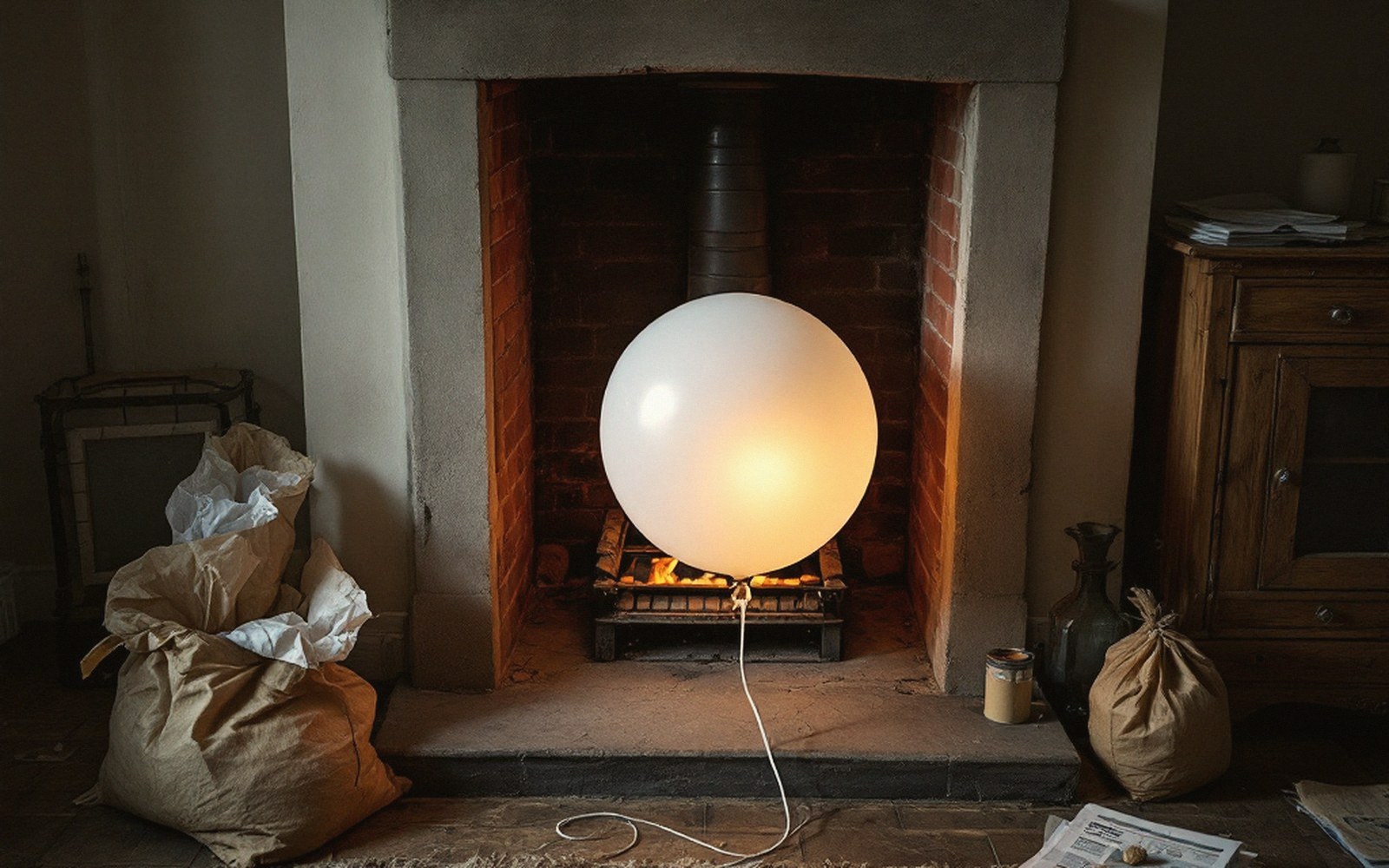
The fix is a chimney balloon or a disc of mineral wool stuffed carefully up the flue, placed above the throat (the narrowing above the firebox) but below the first bend. You are damming the column of cold air, not plugging the chimney pot — that distinction matters.

Why removable only. A chimney that has a gas fire or any other appliance removed from it still needs inspection, and in older properties the flue may serve another room above. More critically, if anyone ever lights a fire, burns a candle, or uses the hearth for any purpose before the block is removed, the consequences are serious. Every temporary block — balloon or wool — must be flagged visibly: a strip of card reading "FLUE BLOCKED" taped to the mantelpiece or fireplace opening does the job. Tell every person in the house.
A chimney balloon is a purpose-made inflatable that wedges into the flue just above the throat and can be deflated and removed in minutes. Mineral wool (rockwool or similar) can be cut and formed into a disc, wrapped in a breathable fabric or pillowcase, and pushed up by hand. Leave a string or cord hanging down so it can be retrieved. Both methods let the masonry breathe — a truly airtight seal can cause condensation damage inside the flue.
Neither block replaces a proper inspection for gaps around the fireplace itself: the join between the fire surround and the wall, the hearth edges, and any old ventilation brickwork at the base. Tackle those separately with appropriate filler once the main draught is stopped.
Where we stop
No mains electricity, gas, water mains, boilers, flue repairs, roofs, ladders past single storey, structural work or anything requiring a qualified person. If a job could hurt somebody, it is not in this register.