A chair joint
One loose rung and the whole chair starts to go. The repair takes ten minutes and lasts years — if you clean the joint first.
What the job needs
- Glue from an old pot — ordinary PVA, nothing specialist
- Something to clean the joint: skewer, nail, strip of sandpaper
- Cotton thread if the tenon is loose
- A ratchet strap or rope to act as a clamp
Clean it properly, then close it
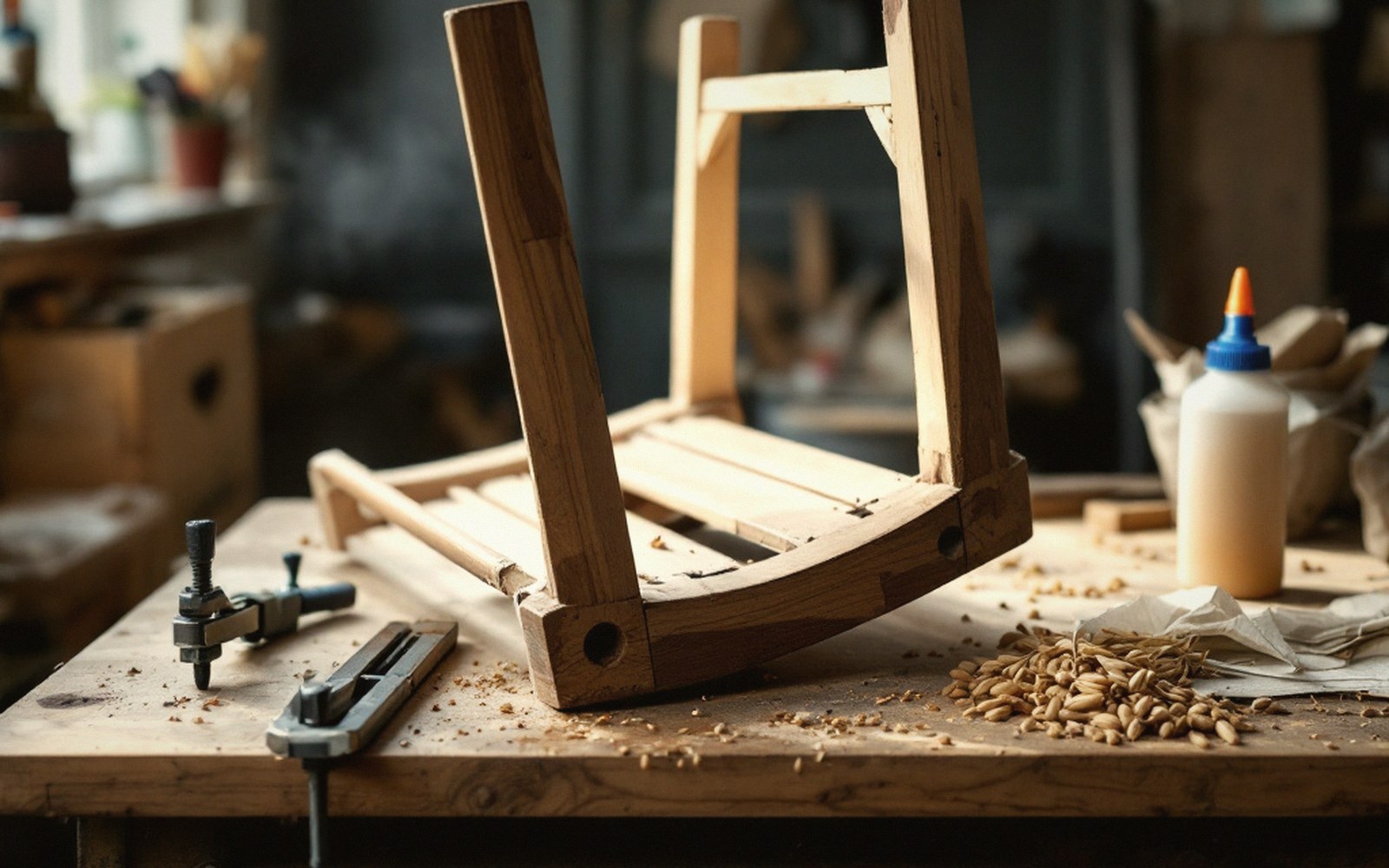
A chair that rocks or has one wobbly leg is almost always a glue failure, not a broken joint. The timber itself is probably fine. What has failed is the dried hide glue or PVA from the original assembly, and layering new adhesive over old is the single most common reason a home repair fails within months.

Start by working the joint fully apart. Gentle wiggling is usually enough; if it resists, a damp cloth held against the joint for a few minutes will soften old hide glue — the traditional animal-based adhesive that most older chairs used — enough to release it cleanly. Never force a joint with a mallet unless you know which way the grain runs and have something to absorb the shock; a clean break is still a break.
Once apart, clean both surfaces thoroughly. A wooden skewer, a nail, or the corner of a scraper will clear glue from inside a socket; fold a piece of sandpaper into a strip and run it back and forth along the tenon — the protruding end of the rung. You are aiming for bare wood, slightly rough to the touch. If the tenon is now noticeably loose in the socket, a thin wrap of cotton thread, worked into the freshly glued surface before assembly, builds the diameter back up without adding anything rigid that could crack.
Apply a thin, even coat of wood glue — PVA from any old pot — to both surfaces, working quickly. Seat the joint and rotate the rung slightly as you push it home; this spreads the glue and drives out air. Clamp it. A ratchet strap looped round the whole chair frame is the best clamp you are likely to have: tighten it until a little glue squeezes out, then stop. A length of rope twisted tight with a stick works just as well.
Leave it undisturbed for at least a full day — longer in a cold room. PVA reaches working strength within a few hours but full strength takes longer, and chair joints are under constant stress from the moment someone sits down. A little patience at this stage is the difference between a repair that holds and one you will be repeating next winter.

Where we stop
No mains electricity, gas, water mains, boilers, flues, roofs, ladders past single storey, structural work or anything requiring a qualified person. If a job could hurt somebody, it is not in this register.