A heap that heats
A cold, wet pile in the corner is just slow rot. Get the mix right and the heap does something dramatic: it heats up, and that heat is what actually composts.
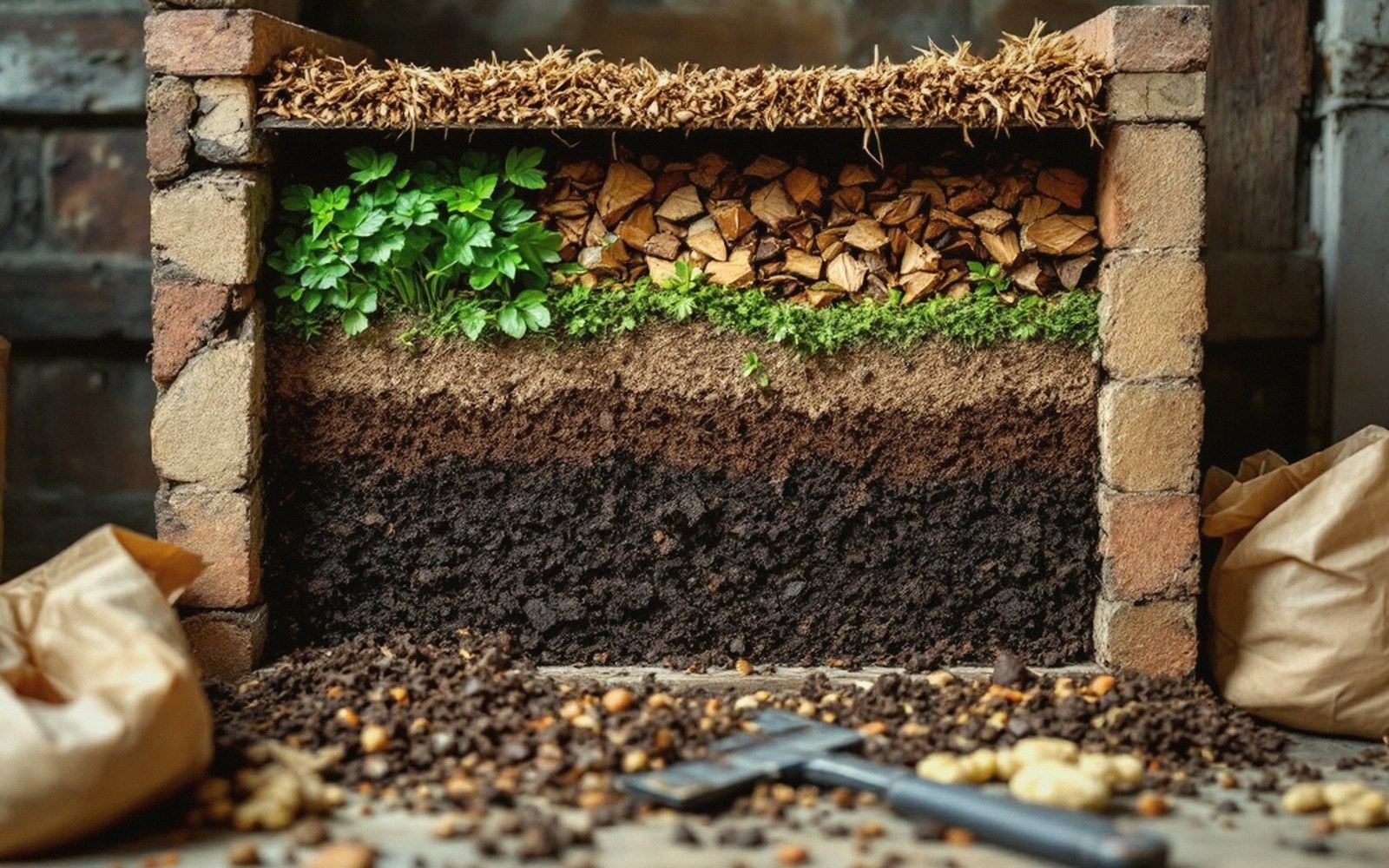
What to add and what it fixes
- Heap gone slimy and cold — add torn cardboard or dry leaves; turn it
- Heap bone dry, doing nothing — water it; add fresh green material
- Ammonia smell — too much nitrogen; add carbon browns and turn
- Sulphurous smell — too wet and airless; add browns, open it up, turn
- Never heats up — pile probably too small or too dry; combine two small heaps if possible
What makes a heap work
Compost happens because millions of microorganisms — bacteria, fungi, actinomycetes — are eating organic matter and generating heat as they do it. A working heap can reach 50–60 °C at its centre, hot enough to kill weed seeds and most pathogens. A heap that never heats is not failing exactly; it will eventually break down, but it takes years rather than weeks, and it does not get hot enough to sanitise anything.
Three things control whether those microorganisms thrive: the ratio of carbon-rich material to nitrogen-rich material, the moisture level, and the amount of air moving through the pile. Get all three right at once, and the heap practically runs itself.
The ratio, the moisture, the air
Carbon to nitrogen. The classic shorthand is green and brown: greens supply nitrogen (grass clippings, vegetable peelings, coffee grounds), browns supply carbon (cardboard, dry leaves, woody stems). The microorganisms need roughly 25–30 parts carbon to one part nitrogen by mass — a ratio that sounds technical but translates simply to: about half and half by volume, maybe slightly more brown than green. A heap that is all grass clippings goes slimy and anaerobic; one that is all cardboard does nothing. Alternate layers or mix as you add, and correct by feel as you go.
Moisture. The heap should feel like a wrung-out sponge — damp throughout but not dripping. Squeeze a handful; a few drops is right, a stream of liquid means it is waterlogged. In wet weather, a lid or old piece of carpet keeps rain off; in dry weather, water the heap gently with a can. Dry material added in bulk — a pile of autumn leaves, a lot of torn cardboard — almost always needs wetting before it goes in, or it sits inert.
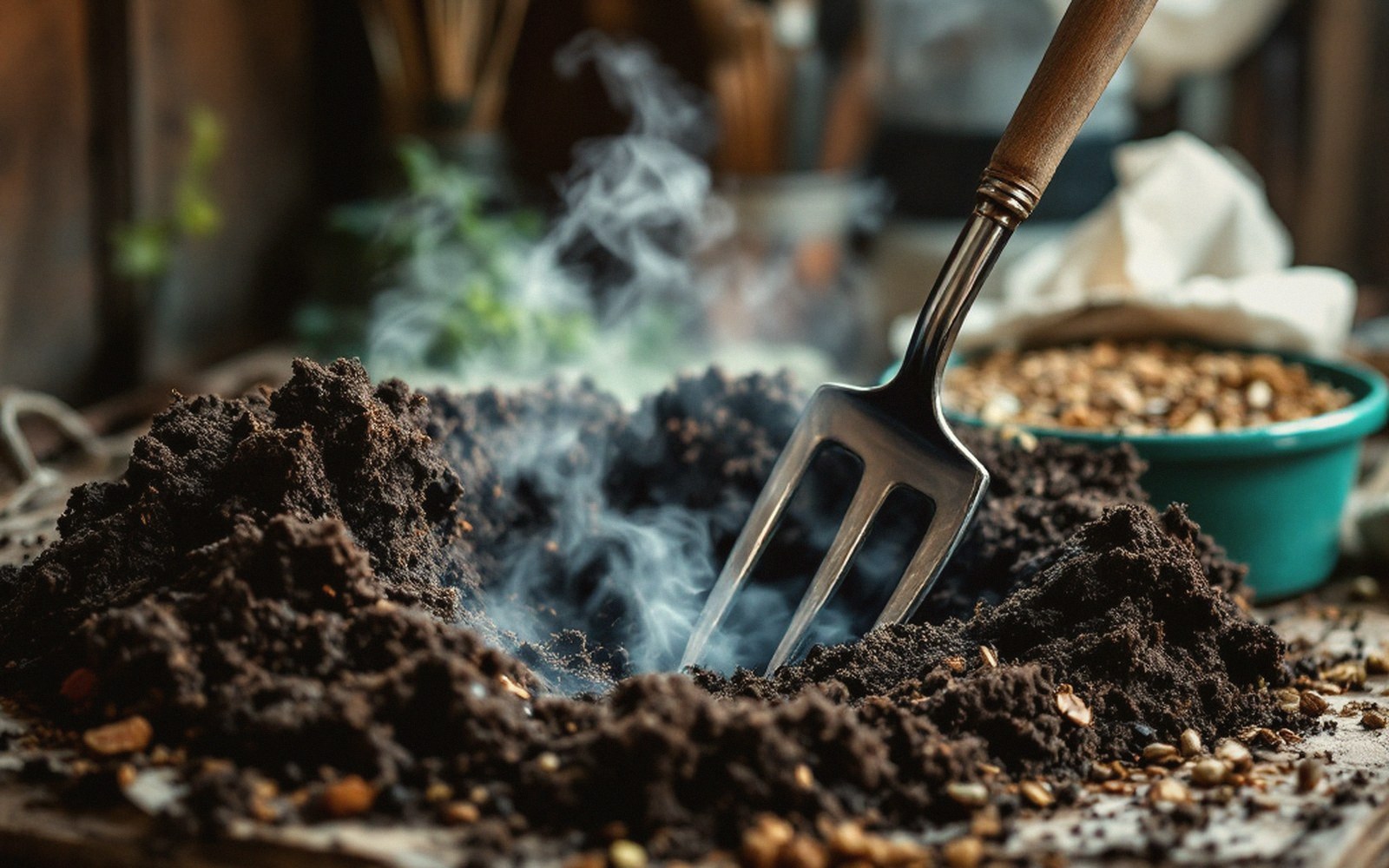
Air. Aerobic bacteria (the ones that generate heat) need oxygen. Anaerobic bacteria (the ones that produce the smell of a blocked drain) take over when air runs out. The difference between a hot heap and a stinking one is often just turning. Push a garden fork into the pile and turn it — outside to inside, top to bottom — every week or two when it is active, less often once it settles. Even a single turn can restart a heap that has gone cold and flat. A hollow tube of rolled cardboard pushed into the centre as you build adds permanent aeration without any effort.
Building and reading the heap
Start with a layer of coarse material — woody prunings, scrunched cardboard — at the base. This lifts the pile off the ground and lets air in from below. Then alternate greens and browns as they come, breaking or chopping larger pieces where you can. A critical mass of about a cubic metre heats most reliably; smaller heaps can work but rarely get as hot, and they dry out faster.
Read the heap as you would a slow-cooking pot. Steam rising when you turn it is a good sign — that is the heat doing its job. A sulphurous or ammonia smell tells you the balance is off: sulphur usually means too wet and airless (add browns, turn it); ammonia usually means too much nitrogen (add browns, turn it). A heap that is bone dry and does nothing needs water and a handful of fresh greens to restart the biology.
When the material in the bottom third has turned dark, crumbly and earthy-smelling — not like the original ingredients at all — it is ready. Roughly three to six months for an actively managed heap in warm weather; longer in winter, when microbial activity slows regardless of what you do.
The satisfaction is real and slightly disproportionate: a pile of kitchen scraps and cardboard boxes becomes something that smells of forest floor and improves soil on contact. It happens because of heat, and the heat happens because you got the mix right.

Where we stop
No mains electricity, gas, water mains, boilers, flues, roofs, ladders past single storey, structural work or anything requiring a qualified person. If a job could hurt somebody, it is not in this register.