What not to put in
The heap does not care for some things, and a few make it genuinely worse.
What to leave out — and why
- Cooked food, meat, fish, dairy, oils — attracts rats; use a sealed bokashi bucket instead
- Diseased plant material — pathogens can survive a cool heap and return in finished compost
- Perennial weed roots (couch grass, bindweed, ground elder) — reshoot from fragments; soak in water first or bin them
- Annual weeds gone to seed — seeds survive unless the heap has run hot
- Dog and cat faeces — pathogens not reliably neutralised at domestic temperatures
- Glossy or plastic-laminated paper and card — coating does not break down
- Japanese knotweed and other legally regulated invasives — legal rules apply; use council waste stream
The short list, and why it is short
Composting is forgiving. Most organic matter breaks down eventually, and beginners often worry more about the rules than the practice warrants. The real list of things to avoid is not long, but the items on it are there for a reason: they attract vermin, damage soil health, spread disease back through your garden, or simply take decades rather than months.
Cooked food and meat are the obvious ones. Raw vegetable peelings are welcome; a roasted chicken carcass is not. The problem is not decomposition — bone and fat break down — it is that they broadcast a strong scent at ground level for as long as they sit there, and rats will find them before the heap can process them. Cooked scraps of any kind, fish, dairy and oils belong in a bokashi setup, which is sealed and can handle what an open heap cannot.
Diseased plant material should not go in unless you are confident your heap reaches temperatures high enough — consistently above 55 °C in the core — to kill pathogens. A domestic heap usually does not. Clubroot, onion white rot and blight spores can survive a cool heap and return to the soil on finished compost. Burn diseased material or put it in the council bin.
Perennial weed roots — couch grass, bindweed, ground elder — are persistent enough to reshoot from fragments. They belong in a bucket of water for several weeks until thoroughly rotten, or in the bin. Annual weeds that have gone to seed are similarly best avoided unless you are sure the heap has run hot: most seeds survive at temperatures that feel warm to the touch.
The council waste stream handles them correctly; your heap does not.
Dog and cat faeces carry pathogens that compost cannot reliably neutralise at domestic temperatures. Human waste composting is done safely, but requires specific design and long hold times; an ordinary garden heap is not the right tool. Pet bedding from herbivores — rabbits, guinea pigs — is fine; carnivore waste is not.
Glossy or coated paper, card with heavy ink coverage, and anything that is clearly plastic-laminated should not go in even though plain cardboard is an excellent carbon source. The coating does not break down on a useful timescale.
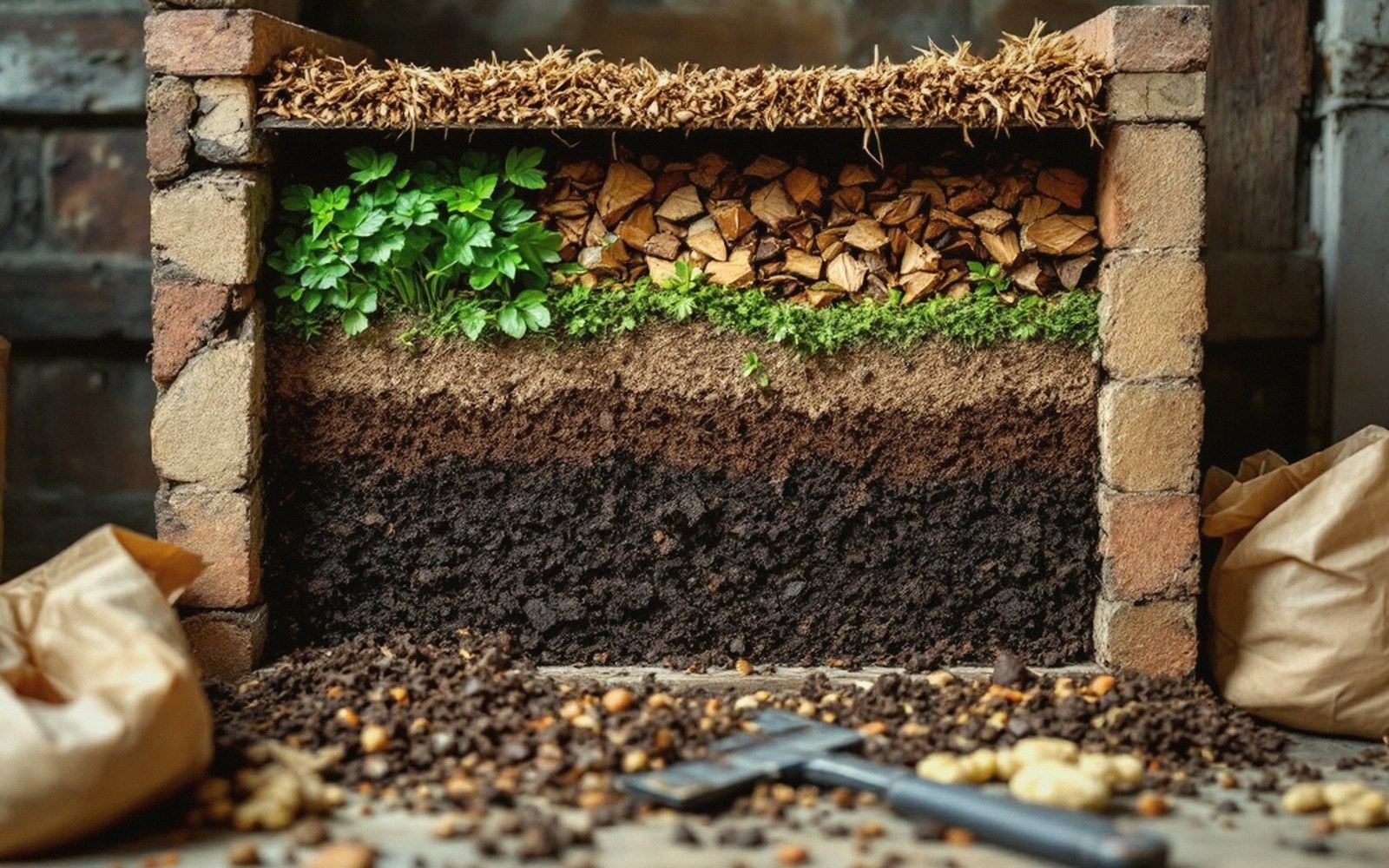
Finally: invasive plants regulated under national legislation — Japanese knotweed in Great Britain is one — must not be composted or moved off-site without following the legal rules. The council waste stream handles them correctly; your heap does not.
That is genuinely the list. Everything else — with patience and a reasonable balance of green and brown material — is fair game.
Where we stop
No mains electricity, gas, water mains, boilers, flues, roofs, ladders past single storey, structural work or anything requiring a qualified person. If a job could hurt somebody, it is not in this register.