Bokashi
A sealed bucket and a bran inoculant for kitchen waste the compost heap cannot take.

How it compares to a heap
- Accepts — cooked food, meat, fish, dairy, citrus, small bones
- Does not accept — large bones, excessive liquid, mouldy food already far gone
- End product — pre-fermented mass that still needs soil or a heap to finish
- Smell when right — sour, pickled, slightly vinegary
- Smell when wrong — putrid; means air entered
What it is and how it works
Bokashi is a Japanese word meaning fermented organic matter, and the process is fermentation, not decomposition. That distinction matters. A bokashi bucket doesn't break waste down — it pickles it in a low-oxygen, mildly acidic environment created by a microbial bran inoculant. The result looks much as it went in, smells sour rather than rotten, and finishes breaking down once it goes into soil or a compost heap. The heap gets the credit; the bucket does the pre-work.
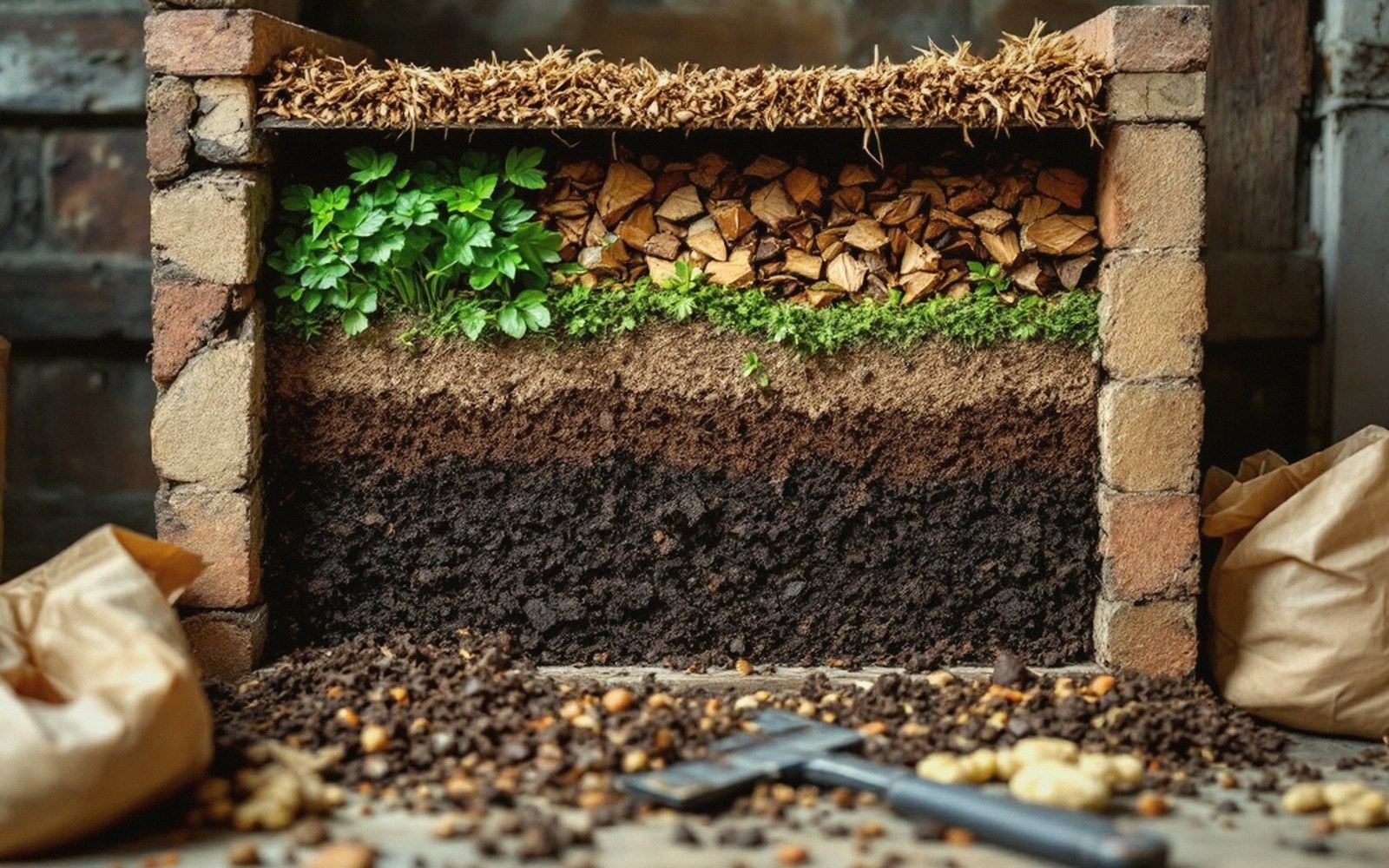
The practical advantage is what it accepts. Cooked food, meat, fish, dairy, citrus — the things a conventional compost heap cannot safely take — all go in. You fill a bucket, press the waste down to exclude air, sprinkle on bran inoculant, seal the lid, and repeat. When full, you leave it sealed for at least two weeks. During that time the microbes — principally lactobacilli, yeasts and phototrophic bacteria — ferment the contents. A tap at the base drains off bokashi liquid, which diluted roughly 1:100 with water makes an effective liquid feed for outdoor plants; undiluted it unblocks drains.
Running it in practice
You need two buckets so that one can ferment while the other fills. A tight-fitting lid is essential — any significant air entry and you get mould rather than fermentation. The smell when you open the bucket should be sour and pickled, not putrid. A foul smell means air got in, usually because the waste wasn't pressed down or the lid wasn't seated properly. That batch can go directly into garden soil as long as you dig it in and cover it; the soil will finish the job.
After two weeks, the fermented mass goes into a trench or hole in the garden, covered with at least ten centimetres of soil. Within two to four weeks it breaks down completely and conditions the soil around it. Alternatively, add it to a compost heap where the acidity will balance out and the partially processed material decomposes quickly. Don't let it sit in the bucket much beyond the two-week mark — the fermentation holds but the contents become unpleasant to handle if left much longer.
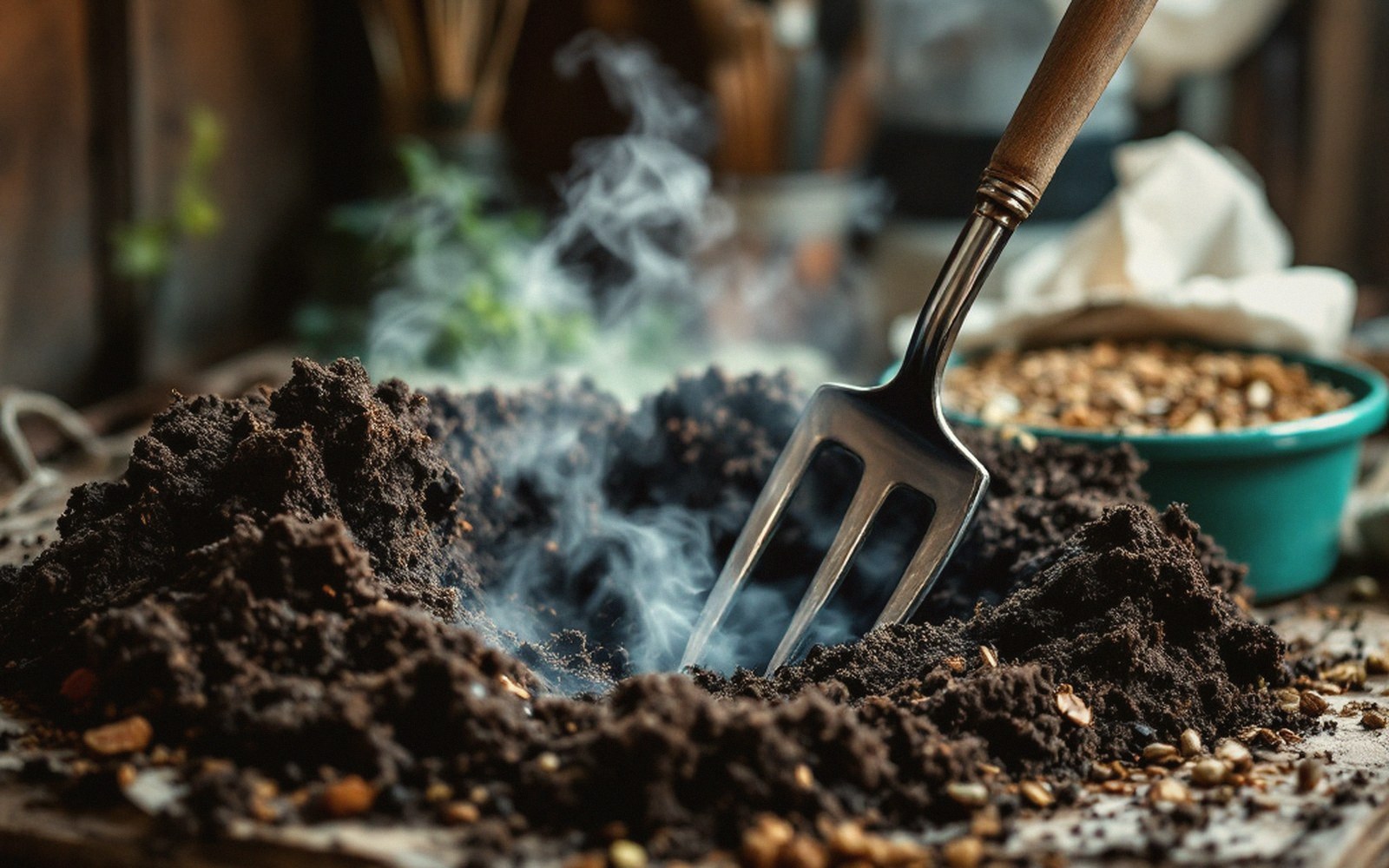
Bran inoculant keeps for months in a sealed bag in a cool, dry place. You use it sparingly — a thin, even dusting over each layer of waste is enough. The microbes do the work; more bran does not mean faster fermentation.
Where we stop
No mains electricity, gas, water mains, boilers, flues, roofs, ladders past single storey, structural work or anything requiring a qualified person. If a job could hurt somebody, it is not in this register.