Darning a hole
A darn isn't a patch sewn over a hole — it's new fabric woven across it, using the old fabric as a frame.
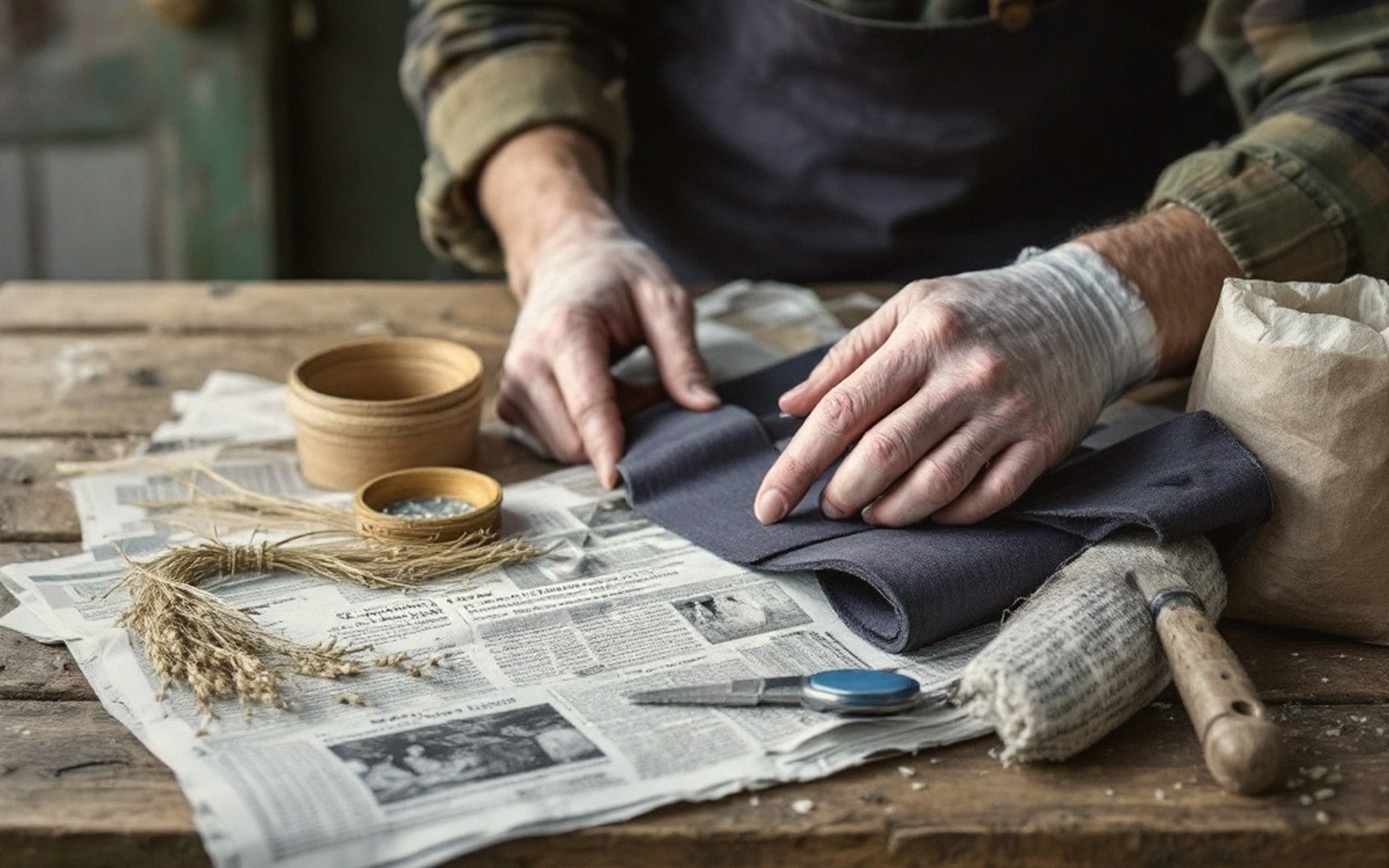
Materials at a glance
- darning mushroom — a handled wooden dome; any smooth rounded object does the same job
- warp — the first set of parallel threads laid across the hole
- weft — the second set woven at right angles through the warp
- running stitch — the tiny anchoring stitch taken into sound cloth at each edge
How to darn
The principle is simple: you lay parallel threads across the gap, then weave a second set at right angles through them, building a small rectangle of new cloth inside the old one. The result is flexible, sits flat, and — done well — outlasts a stuck-on patch.
You need a needle, thread that roughly matches the weight of the fabric, and something rounded to work over. Traditionally this is a darning mushroom, but the bowl of a wooden spoon, a light bulb, or a smooth stone will do. The point is to hold the fabric taut without stretching it — a hole worked flat tends to pucker.
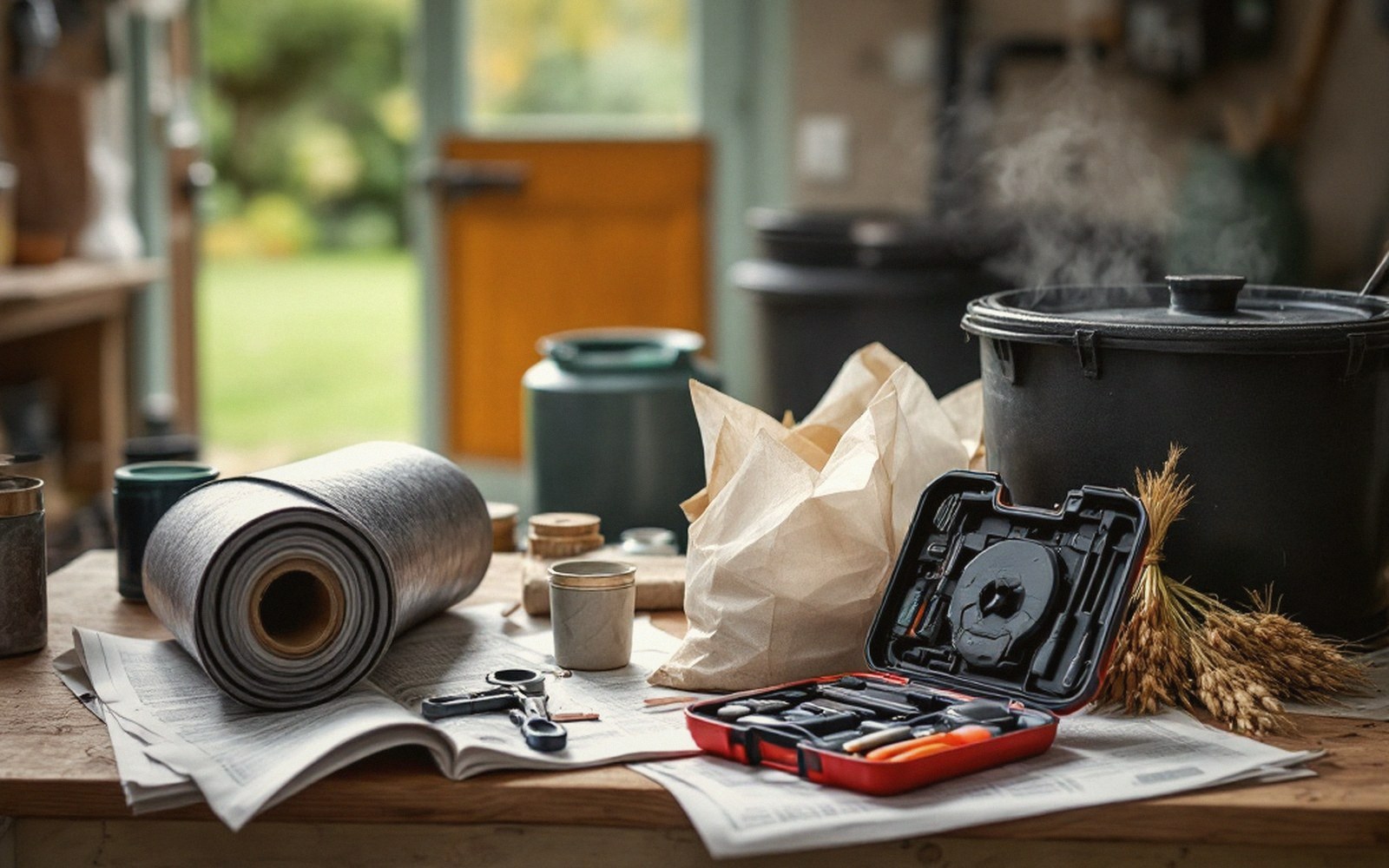
Choose your thread with care. Wool on wool works best; the fibres felt very slightly together under wear and the repair beds in. For cotton, use a cotton thread close to the yarn weight of the fabric. Avoid anything synthetic on natural cloth if you can — it will wear differently and show. If you want the darn invisible, unravel a thread from an inside seam allowance and use that.
Start well outside the hole — a centimetre or more into sound cloth. Running the stitches into good fabric on all sides spreads the tension and stops the repair tearing away at its edges. Lay your first set of parallel threads (the warp) across the hole in straight lines, spaced about one thread-width apart, anchoring each pass with a tiny running stitch into the surrounding cloth. Keep the tension even but not tight. Once the gap is bridged, turn the work ninety degrees and begin weaving the second set (the weft) over and under alternate warp threads, again extending well into the sound cloth on each side. Pack the rows close enough that no light shows through.
On a wool jumper, a little steam from a damp cloth pressed briefly over the area encourages the fibres to relax and the repair to disappear further into the fabric.
When you finish, do not knot the end. Instead, run the tail back through a few rows of the darn itself — knots create a hard lump that will press against skin and eventually pop through.
The darn will look slightly raised at first. Washing and wearing settle it. On a wool jumper, a little steam from a damp cloth pressed briefly over the area encourages the fibres to relax and the repair to disappear further into the fabric.

The same technique works on socks, elbows, the knees of trousers, and worn patches that haven't yet gone through entirely — catch those before they hole and the warp threads are still there to anchor to. A thin spot is always easier to darn than an open hole.

Where we stop
No mains electricity, gas, water mains, boilers, flues, roofs, ladders past single storey, structural work or anything requiring a qualified person. If a job could hurt somebody, it is not in this register.