Drying and storing
Get the seed dry enough before it goes in the envelope, or everything else you did was wasted.
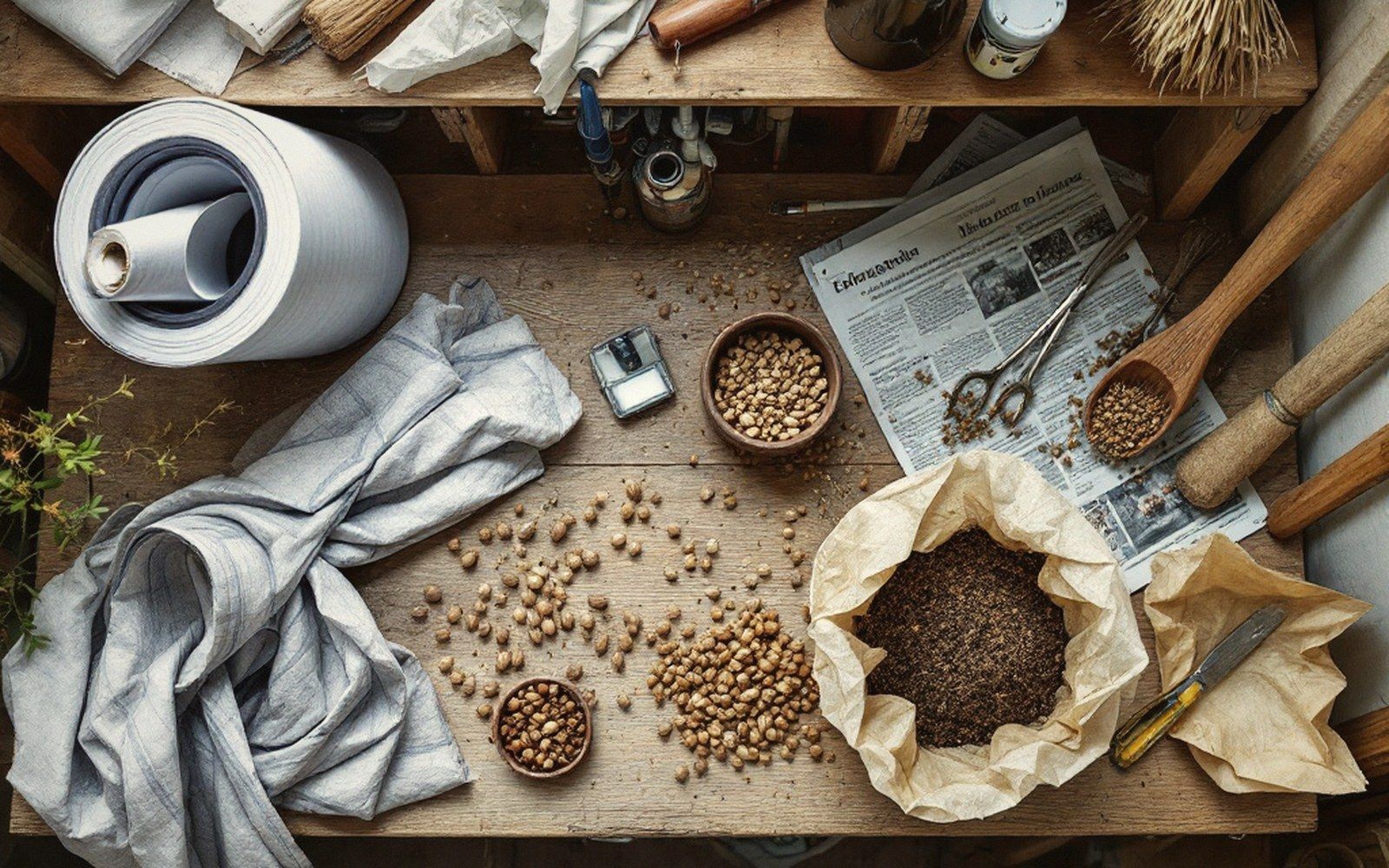
Storage at a glance
- Paper not plastic — paper breathes and wicks moisture away; plastic traps it
- Single layer — seed piled up dries unevenly and may clump
- Snap test — seed ready for storage snaps or shatters rather than bending
- Label before filling — pencil outlasts biro on handled paper envelopes
- Cool and stable — an unheated room or outside-wall cupboard beats a warm kitchen
- Silica gel — a recycled sachet in the tin, not touching the seed directly
Cool, dark and dry — in that order
Once you have chosen your seed and cleaned it, the single biggest threat to viability is moisture. Seed that feels dry to the touch often is not dry enough to store safely; another week or two of drying on a labelled piece of paper in a warm room will not hurt it, and may make the difference between seed that germinates in two years and seed that rots in six months.
Spread seed in a single layer — not piled — on ordinary paper rather than plastic or glass. Paper breathes and wicks any remaining moisture away; plastic traps it. A week on a kitchen shelf away from steam, longer for large fleshy seeds, is usually sufficient. Seeds are ready when they snap cleanly rather than bend, or when they rattle loose rather than sticking together.
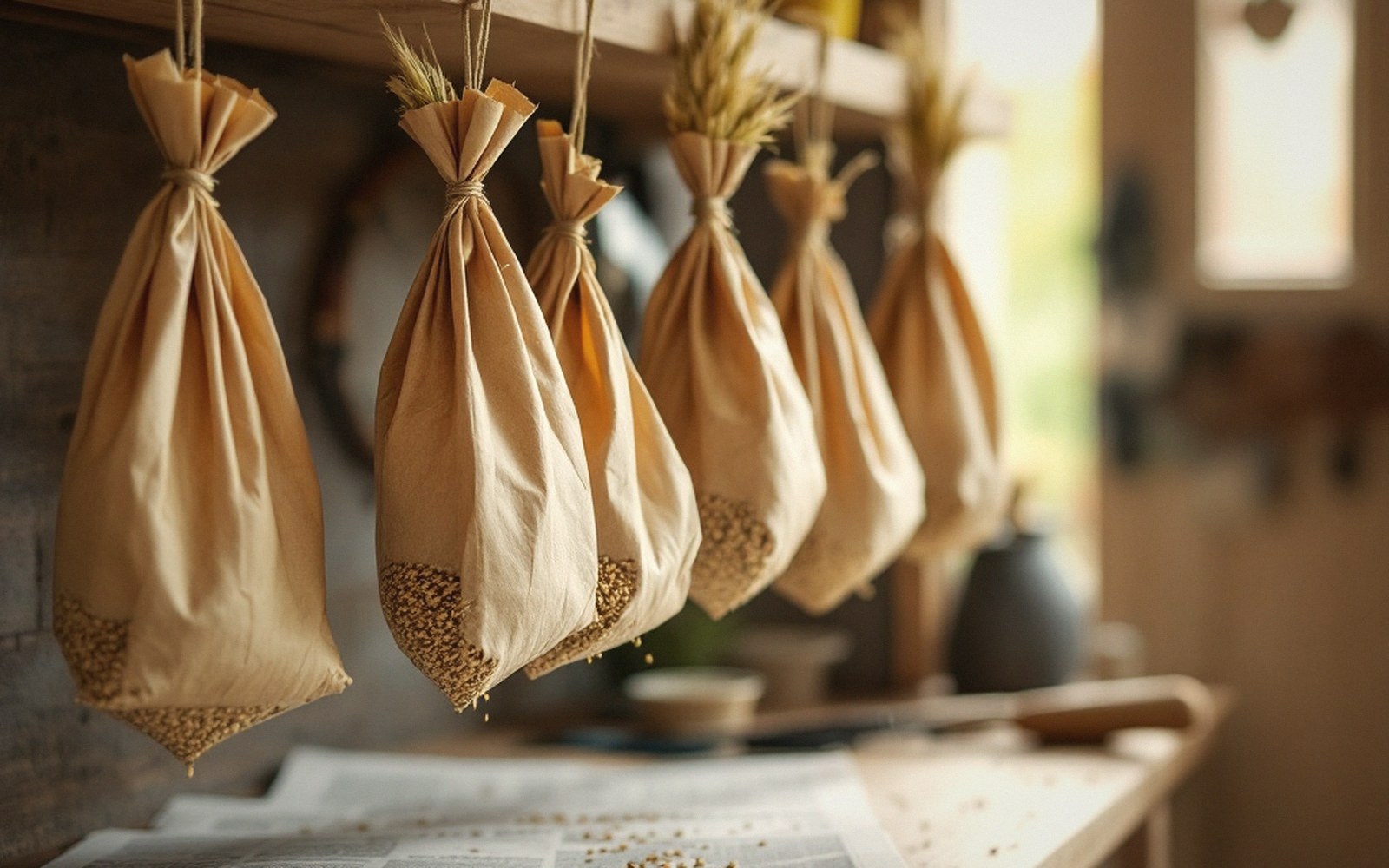
Once dry, paper envelopes are the classic container for good reason: they continue to let the seed breathe without letting in light. Write the species, variety and harvest year on the envelope before you fill it — pencil lasts better than biro on paper that will be handled repeatedly. A small note tucked inside with any extra detail costs nothing and is often the thing you are glad of three winters later.
Envelopes go into a lidded tin, a glass jar with a loose lid, or a cardboard box — anything that keeps out mice and light. The location matters more than the container: cool and stable beats any amount of clever packaging. A drawer or shelf in an unheated room, or a cupboard on an outside wall of a house that does not have underfloor heating beneath, will generally outperform a warm kitchen. Avoid anywhere prone to condensation — garages with poor air circulation can be surprisingly damp.
Check stored seed annually; any that smell musty should go on the compost, not back in the ground.
A small sachet of silica gel from a vitamin bottle or an electronics package, placed in the tin alongside the envelopes, helps absorb any ambient moisture without touching the seed directly. Reuse rather than buy — most households accumulate them without trying.
Check stored seed annually; any that smell musty should go on the compost, not back in the ground.
Where we stop
No mains electricity, gas, water mains, boilers, flues, roofs, ladders past single storey, structural work or anything requiring a qualified person. If a job could hurt somebody, it is not in this register.