Testing old seed
Ten seeds, a sheet of damp kitchen paper, and a few days
What the numbers mean
- 8–10 out of 10 — sow normally, perhaps slightly more generously than usual
- 5–7 out of 10 — sow thickly; you'll still get a crop
- 1–4 out of 10 — not worth the bed space; replace the seed
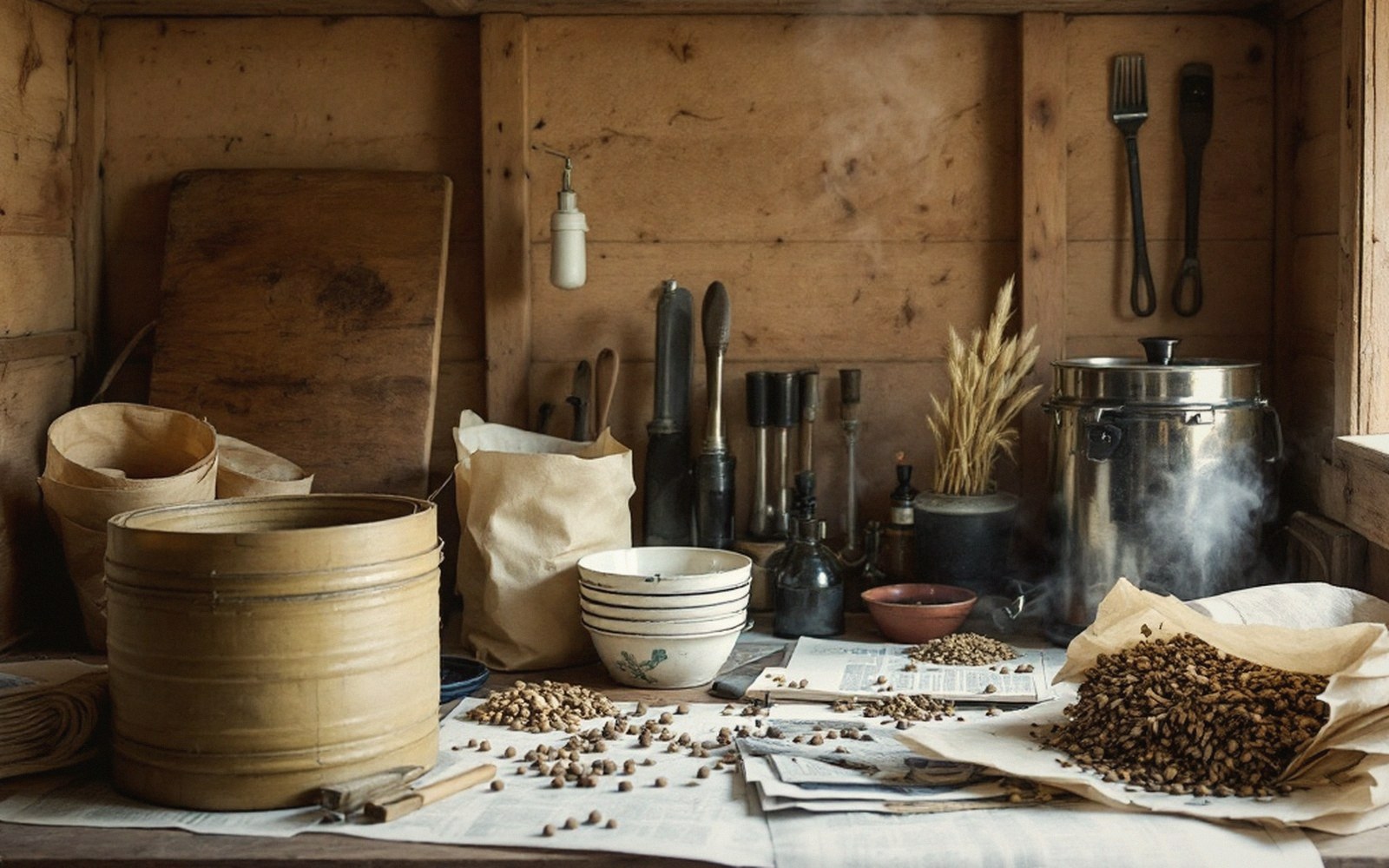
Pull open the seed tin and you'll find half a dozen part-used packets, some from last season, some from who knows when. The question isn't whether to throw them — it's whether they'll still germinate. A quick test on the kitchen counter gives you a real answer before you commit a bed to them.
Count out ten seeds from the packet. Dampen a sheet of kitchen paper until it's moist but not dripping, fold the seeds inside it, and slide the whole thing into a loosely closed plastic bag or cover it with an upturned plate to hold the humidity. Label it with the variety and the date — pencil on a strip of masking tape does fine. Set it somewhere warm: the top of a fridge, a sunny windowsill, or anywhere that stays around 18–21 °C. Then leave it alone.

Check after the number of days the packet gives as germination time. If the packet is long gone, a rough guide: fast germinators like radish and lettuce will show in three to five days; slower ones like parsley or parsnip can take two weeks or more. Count every seed that has cracked open and produced a visible root tip — that is a germination, even if the seedling looks feeble.
Divide your count by ten and you have a percentage. Eight out of ten is perfectly usable; sow a little more thickly than usual to compensate for the few that won't make it. Five or six out of ten means sowing thickly is essential. Four or fewer, and it is genuinely not worth the bed space — compost the rest and buy or swap fresh.
One thing the test does not tell you: whether those seedlings will grow on healthily. Viability and vigour are different qualities, and very old seed can pass the paper test and then sulk in cold soil. If germination was borderline, give it the best possible conditions — warm soil, good light, no competition — and expect some to fall away.
Where we stop
No mains electricity, gas, water mains, boilers, flues, roofs, ladders past single storey, structural work or anything requiring a qualified person. If a job could hurt somebody, it is not in this register.