Saving seed
Take it from the best plant, let it dry on the plant — and label it the moment it comes off, not later.
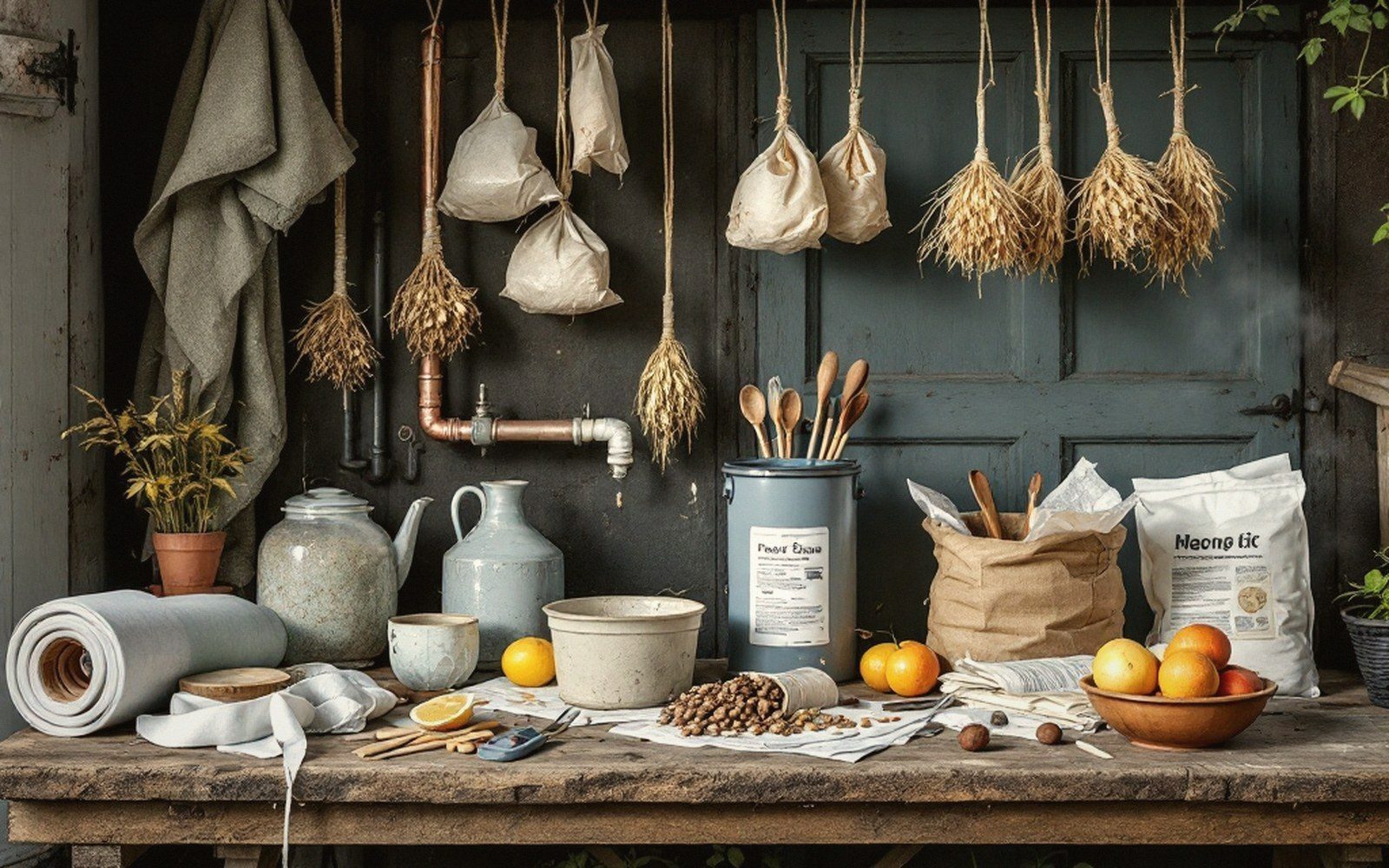
What to check on the plant
- Seedhead or pod — dry, papery, beginning to open of its own accord
- Peas and beans — pod yellow and rattling
- Tomatoes — fully coloured and slightly soft
- Poppies, foxgloves — capsule brown, seeds audible when stem is shaken
Choose the plant first, then wait
The seed you save is only as good as the plant you take it from. Walk your plot before anything is spent, and mark the one you want — a piece of string around the stem is enough. You are looking for the plant that did best: strongest growth, first to mature, most typical of what you wanted from it. Avoid saving from the first flower to open or the last plant standing; both can be outliers that pull the strain in odd directions over time.
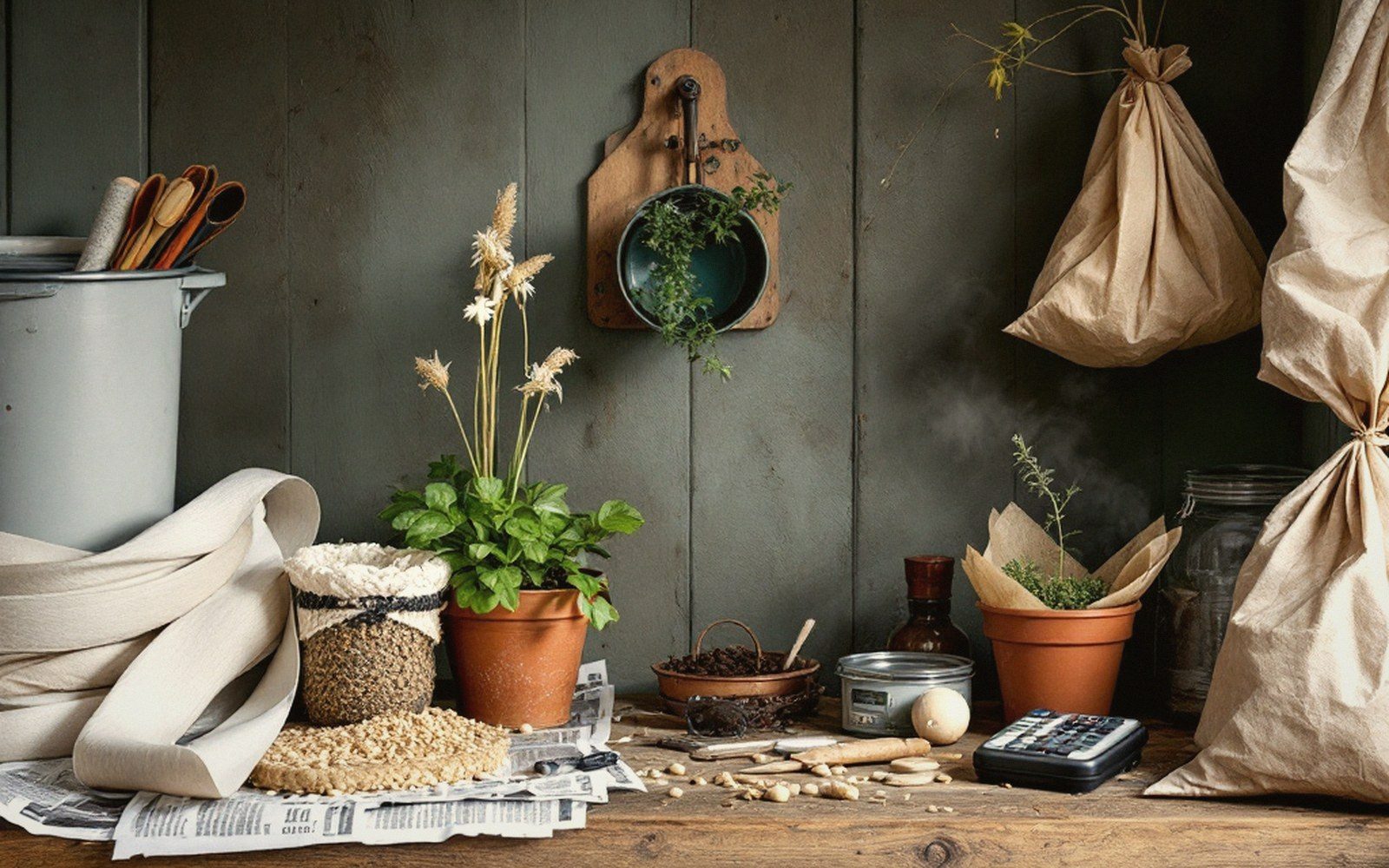
The hardest part of seed saving is waiting long enough. Most people harvest too early because the plant looks finished. It is not. A seed is ripe when the seedhead or pod is dry, papery and beginning to open of its own accord. On a tomato that means fully coloured and slightly soft. On a bean or pea, let the pod go yellow and rattle. On a poppy or foxglove, the capsule should be brown and the seed should move audibly inside when you shake the stem. If you pick it green and damp, it will not store — it will rot.
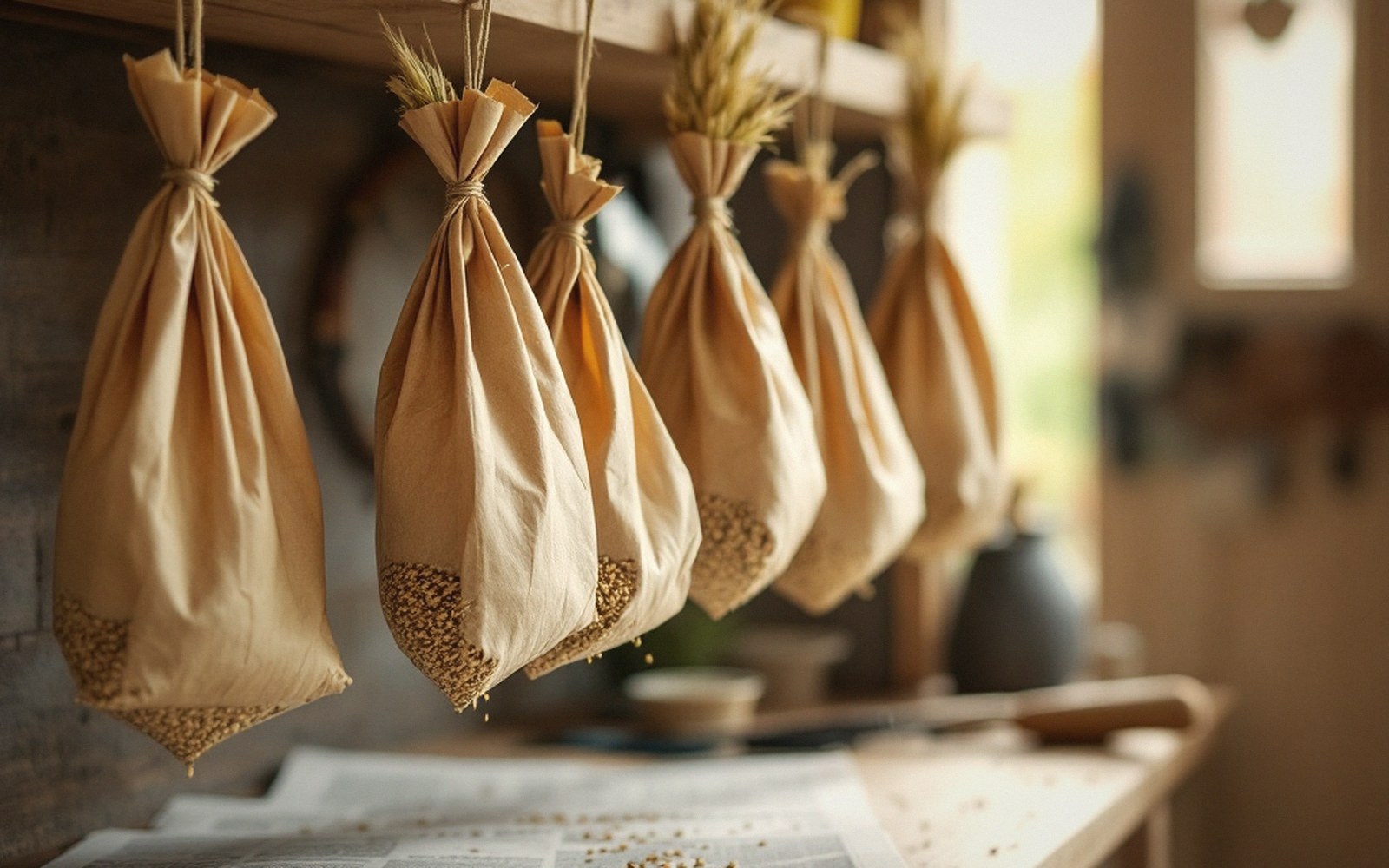
Where rain is a real risk, cut the whole stem when the seed is nearly ripe, tie it loosely upside down in a paper bag and hang it in a dry shed or porch. The seeds will finish ripening and fall into the bag. This is the standard technique for anything in the carrot or parsley family, and for most annual flowers.
Dry it properly, then store it cool and dark
Once the seed is off the plant, spread it on a plate or a piece of newspaper — never on paper towel, which the seed will stick to. Leave it somewhere warm and airy for one to two weeks. Stir it once a day. The test for readiness is simple: small seeds should not dent when you press a fingernail into them; larger seeds should snap cleanly rather than bend.
Any residual moisture is the enemy. It causes mould in storage and, worse, it starts and then kills germination before the seed ever reaches soil. Drying and storing covers the longer-term conditions in detail — the short version is paper not plastic, cool not cold, dark and consistent. A paper envelope inside a screw-top jar, kept in a drawer away from the cooker, is a reliable combination.
Label it the moment it comes off the plant
This is where the losses happen. Seed looks like seed. Unlabelled envelopes in a jar, or labelled envelopes whose ink runs, are the most common reason saved seed gets thrown away unused. Write on the envelope before the seed goes in, not after. Record at minimum: the plant name and variety, the year, and one line about the parent plant — grew to 1.4m, very productive, late-season. That note is the whole point of saving your own: you are not just preserving a variety, you are selecting for the conditions of your own plot.
If you are not sure whether a variety will come back true to type — whether open-pollinated, heirloom or potentially crossed with a neighbour's plant — our guide to which plants come true is the place to start before you save.
Most saved seed is viable for two to four years if stored well; some, like onion and parsnip, deteriorates quickly and is best replaced each season. If you are ever unsure about old stock, ten seeds on damp kitchen paper at room temperature for a week will tell you whether the batch is worth sowing.
One envelope, written before it is filled, stored dry and cool. It is genuinely that simple.
Where rain is a real risk, cut the whole stem when the seed is nearly ripe, tie it loosely upside down in a paper bag and hang it in a dry shed or porch.
Where we stop
No mains electricity, gas, water mains, boilers, flues, roofs, ladders past single storey, structural work or anything requiring a qualified person. If a job could hurt somebody, it is not in this register.