Leaf mould
Dead leaves need almost nothing from you — just time, moisture and a bag.

What to know at a glance
- Leaf type matters — oak, beech, hornbeam good; pine needles, not suitable
- Breakdown is fungal, not bacterial — heat and turning are irrelevant
- Twelve months: mulch-grade; twenty-four months: fine soil conditioner
- Only inputs needed: leaves, a bag, water occasionally
All you do is wait
Autumn leaves rot differently from kitchen scraps or grass clippings. They break down through fungal action rather than bacterial, which means the usual rules — balancing greens and browns, turning, heat — don't apply. Leaf mould is the laziest composting job in the garden, and it rewards patience rather than effort.
Gather fallen leaves in autumn. Dry, whole leaves from oak, beech and hornbeam make the best mould; pine needles are too waxy and acidic and should go elsewhere. Avoid leaves from roadsides where heavy traffic has coated them in particulates. A few slightly damp leaves are fine — bone-dry leaves will just take longer to soften.

Pack them into black bin bags. Pierce a dozen small holes in each bag with a fork, give the contents a brief shake, and tie loosely. Stack the bags somewhere out of the way — behind a shed, along a wall — and leave them. Check once or twice that the contents haven't dried out completely; if they have, add a splash of water and re-tie. That's the job done.
After twelve months you'll have a dark, crumbly, earthy material — part-rotted, good as a mulch. After two full years it's finished leaf mould: fine, dark and almost peat-like in texture. This is a genuinely useful soil conditioner and seed-compost ingredient. Mix it into planting holes, spread it as a mulch, or use it to lighten a clay bed. Unlike peat, it costs nothing and requires no extraction.
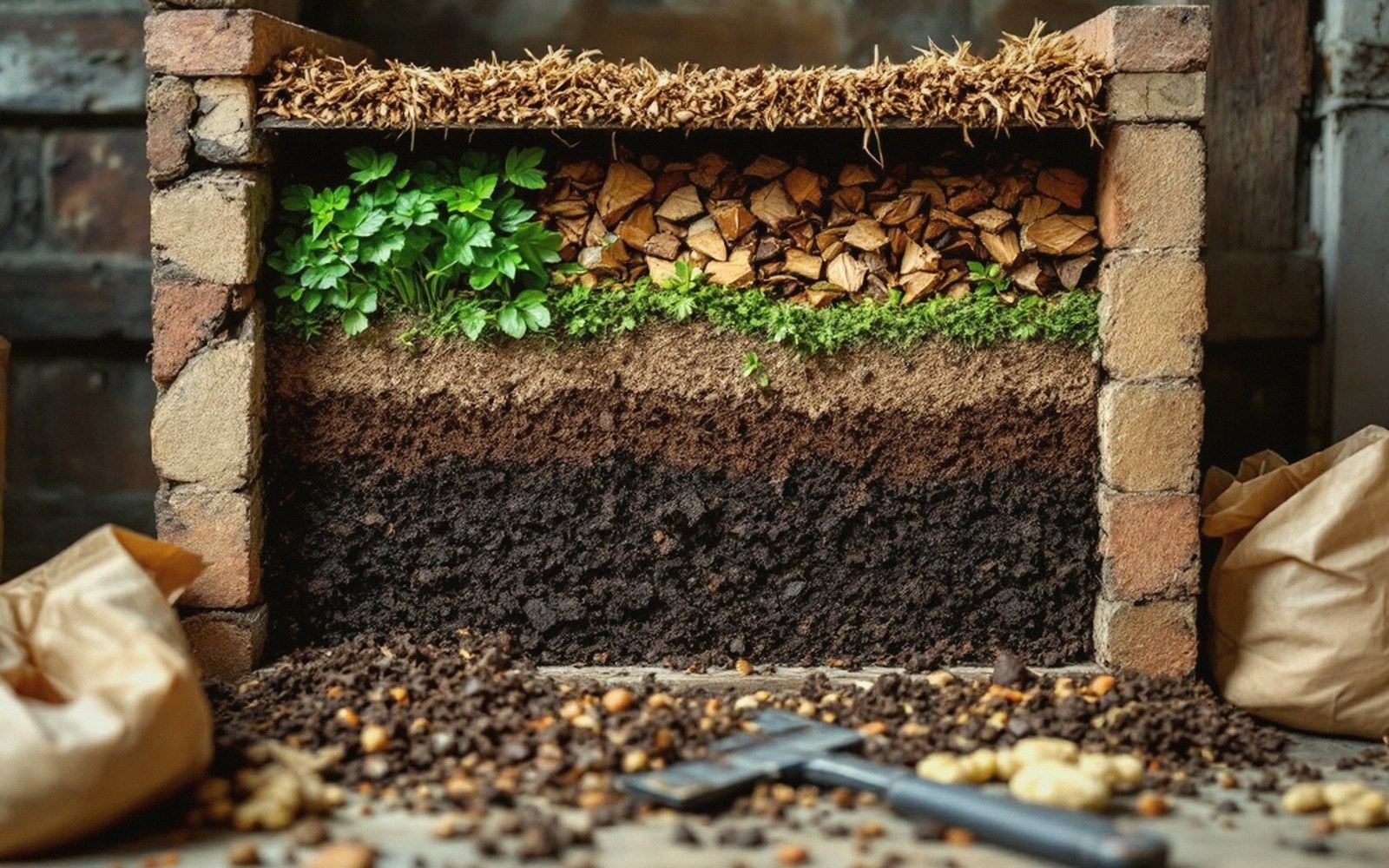
No bag? A simple cage of four posts wound with chicken wire holds a free pile of leaves. They mat together and dry out more than a bag does, so wet the heap occasionally. Results are the same, just a little slower.
Two years feels long, but the work took twenty minutes.
Where we stop
No mains electricity, gas, water mains, boilers, flues, roofs, ladders past single storey, structural work or anything requiring a qualified person. If a job could hurt somebody, it is not in this register.