A butt off a downpipe
Fit a diverter into a downpipe, stand the butt on blocks, and make sure the overflow goes somewhere it can.
Materials and method
- Bricks for platform — four to five standard house bricks, set square on a flat, firm base; not stacked tall
- Pipe sizes to check — 68 mm round or 65 mm square are the common UK downpipe profiles
- Diverter principle — replaces a short section of downpipe; self-bypasses when the butt is full by rerouting water down the original pipe
- Overflow placement — high on the side of the butt; must discharge to somewhere that soaks away, not against a wall or onto a path
- Tank connector — used to fit a stub outlet if the butt has no overflow hole
Getting the height right before anything else
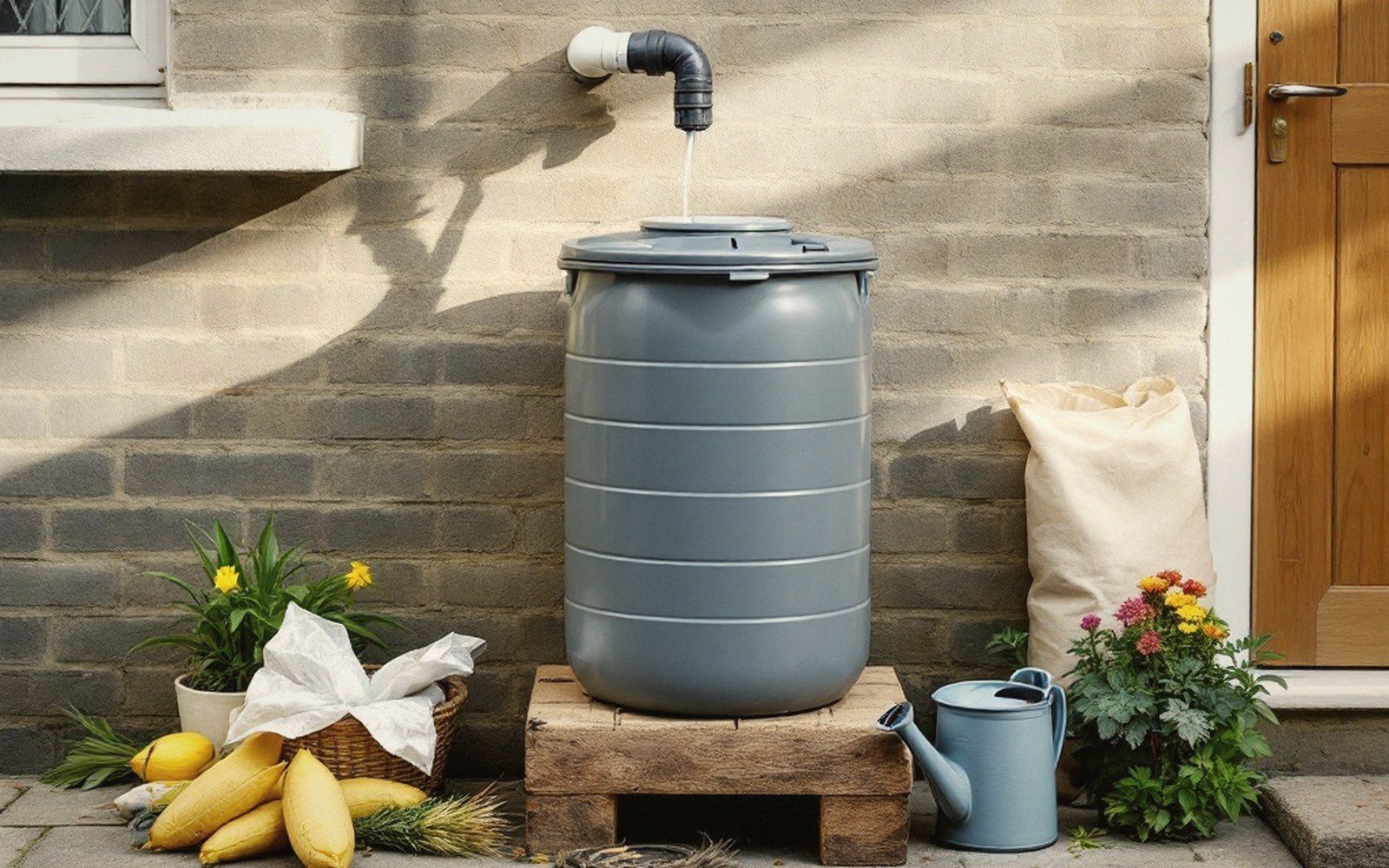
The logic runs backwards from how you want to use the water. A watering can needs roughly 15 centimetres of clearance between its spout and the ground to fill without tipping; a hosepipe attachment needs less but still wants the tap above the ground. Measure your can first, then build the platform to match. Four or five house bricks set in a stable square — not stacked tall — is enough for most standard butts. Lay them on a flat, firm surface: loose soil settles unevenly, and a full butt can weigh well over 100 kilograms. Paving slabs, a poured concrete pad, or compacted gravel all work. The ground needs to be level, or close to it, before the bricks go down.
Position matters too. The butt has to sit directly below a downpipe, or close enough that your diverter's short outlet pipe can reach it. Scout the downpipe you have in mind and check it carries water from a roof rather than an air-gap overflow or a waste stack — those are not rainwater. Gutters from a garage, outbuilding or lean-to are ideal if a house downpipe isn't conveniently placed near where you garden.
Fitting the diverter
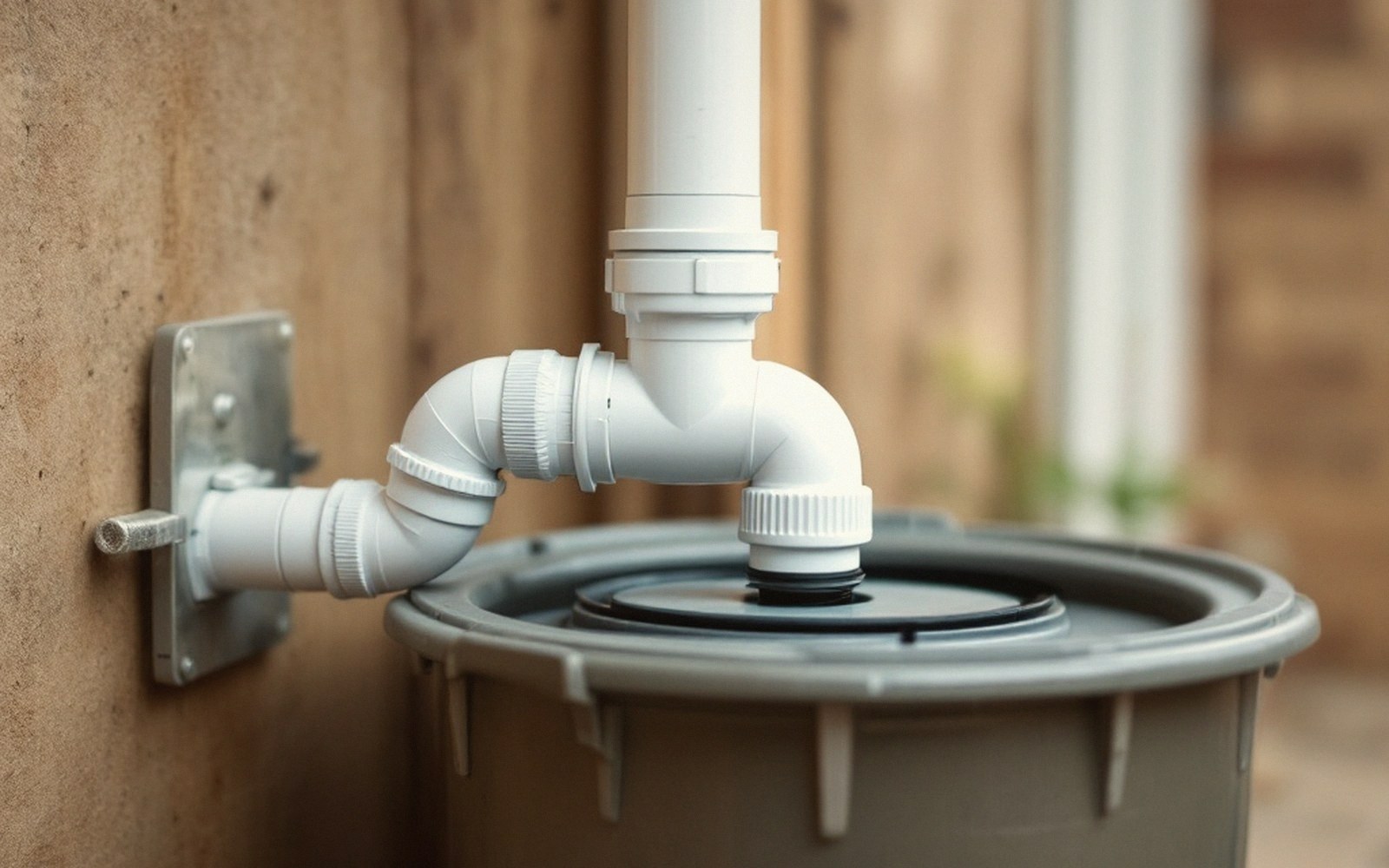
A diverter is a moulded section you swap into the downpipe in place of a short length of pipe. Most are sized for 68 mm round or 65 mm square profiles — the two common standards in the UK — so check your pipe before you buy one. The fitting itself takes twenty minutes and a hacksaw.

Mark the cut lines on the downpipe at the heights shown on the diverter's instructions, which account for the length of the section you're removing. Cut cleanly, square to the pipe. The diverter slots in using the existing pipe connectors above and below, or clips that come with the unit. A short flexible hose — usually supplied — runs from the diverter's outlet port to a hole cut or drilled into the lid or upper side of the butt.
The key feature is the self-bypassing design: when the butt is full, water backs up inside the diverter and is redirected down the main pipe rather than overflowing from the top of your butt. This only works if the downpipe below the diverter remains clear and unblocked, so don't crimp or cap it.
The overflow, which most people get wrong
Even with a bypassing diverter, the butt itself needs an overflow outlet fitted high on the side, near the top. If your butt arrived without one, drill a hole and fit a tank connector with a short stub of hose — or simply run a length of hose from the hole. The question is where this water goes.
Pointing it at a bed or border is the obvious answer, and a good one: slow overflow watering the ground beside the butt is genuinely useful. If that's not possible, it needs to discharge somewhere it can soak away — lawn, gravel, a soakaway pit — not onto a path where it pools, and not into a neighbour's property. Directing it back towards the house wall is the one thing to avoid; sustained damp at the base of a wall causes real damage over time. Get the overflow aimed before you consider the job done.
Standing water in a butt that sits unused for weeks will also turn green and start to smell, which is why a lid, a filter and the habit of using the water regularly matter as much as the installation itself.
Checking it works
Wait for rain, or tip a bucket of water slowly into the top of the gutter above and watch. Water should reach the butt within seconds of rain starting. Once the butt is full and the diverter bypasses, water should run clear down the pipe below as before. If it doesn't, the lower section of pipe may be partially blocked — clear it from ground level with a drain rod or a long stiff brush. That's the whole job: a morning's work, a hacksaw, and a platform that's level and stable.
A diverter is a moulded section you swap into the downpipe in place of a short length of pipe.
Where we stop
No mains electricity, gas, water mains, boilers, flues, roofs, ladders past single storey, structural work or anything requiring a qualified person. If a job could hurt somebody, it is not in this register.