The overflow
You fit a water butt, fill it to the brim in the first downpour, and then forget about it. The next storm sends water straight down the side of the house.

What you need
- Overflow port size — check your butt; typically 22 mm or 25 mm
- Rubber grommet — if drilling a new port
- Short length of hose or waste pipe — to direct overflow away from the house
- Flat or spade drill bit — only if the butt lacks a port
Where the water actually goes
A full butt has nowhere to put the next hundred litres, and water takes the easiest route available. If you have not planned that route, the easiest route is usually back against the house wall — pooling at the foundation, soaking into render, finding gaps around a doorframe. None of that is dramatic in the short term. Over a season or two it is.
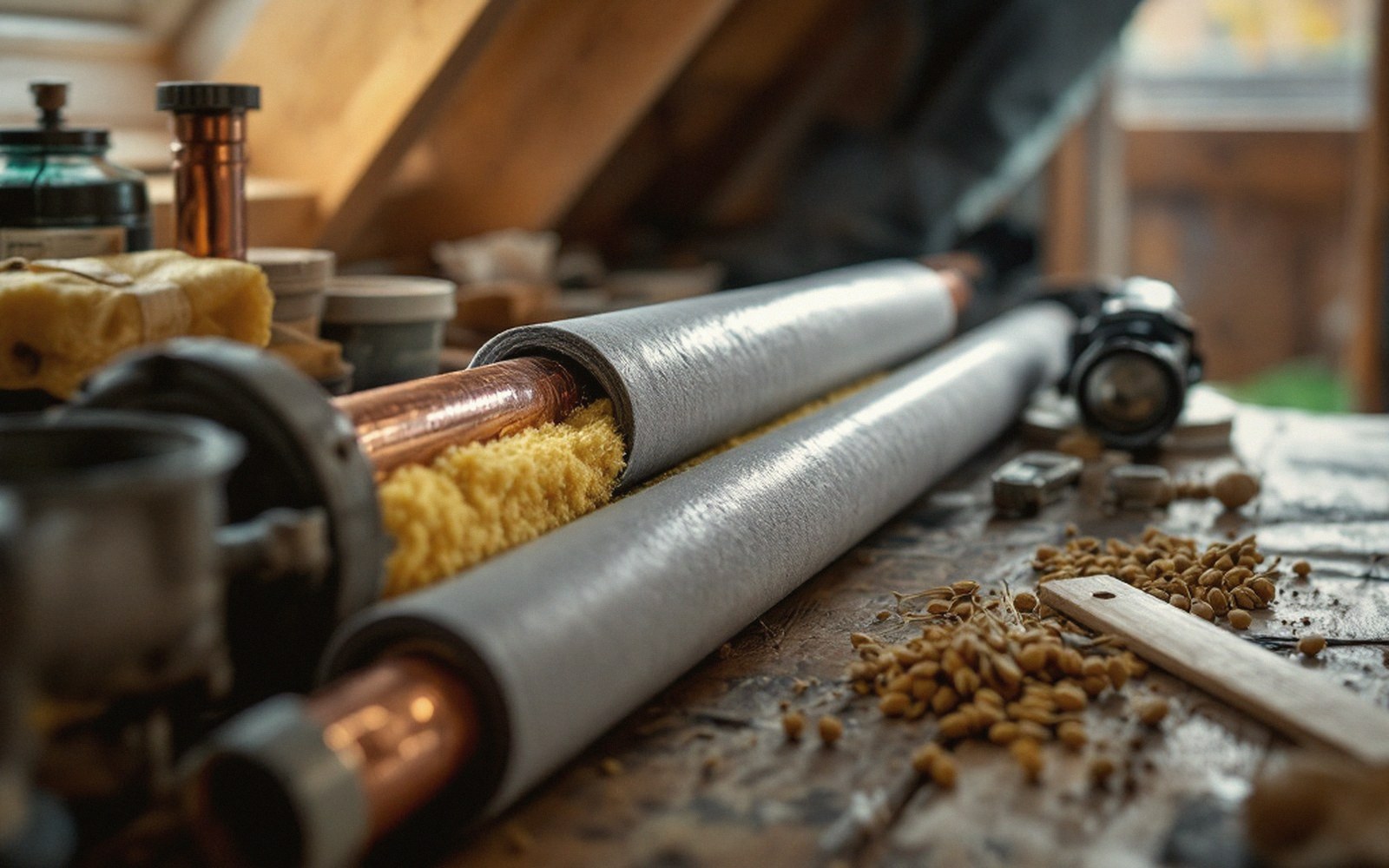
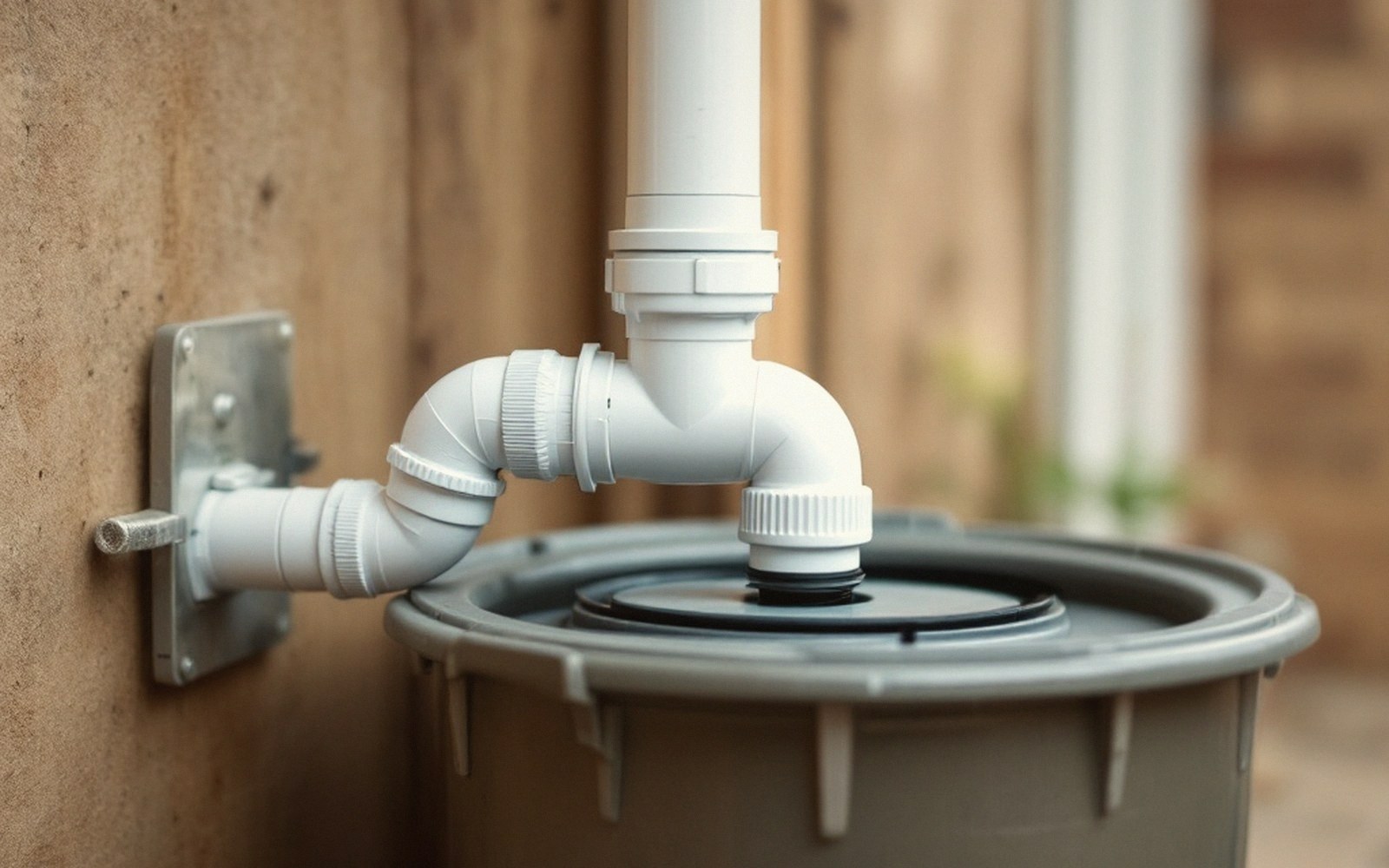
The fix is simple and needs almost nothing. A standard overflow port is moulded into most butts just below the rim: a short threaded boss, usually 22 mm or 25 mm across. If yours came with a bung in it, take the bung out now. Then fit a short length of old garden hose or waste pipe — whatever fits — and direct it somewhere sensible: onto a bed, toward a drain, or into a second butt if you have one. The pipe wants to slope away from the house and end somewhere the water can disperse rather than pool.
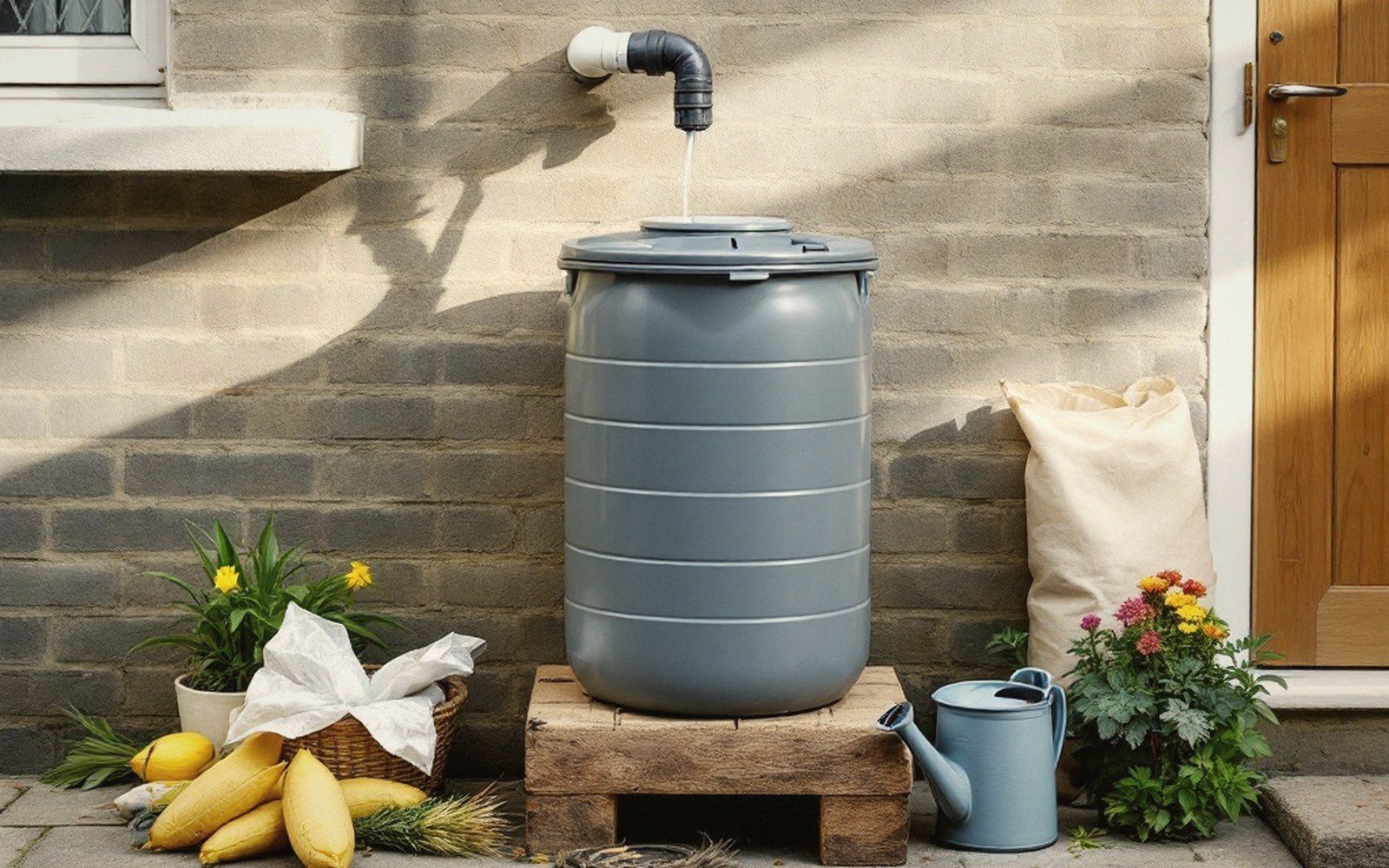
If your butt has no overflow port — cheaper models sometimes omit it — drill one yourself with a flat or spade bit at the correct diameter, about 5 cm below the rim. The hole wants a grommet pressed in to seal it cleanly around the pipe; a rubber grommet from any hardware oddments tin will do. Push the hose through, angle it downward, and that is the job. The water now has a planned destination rather than an improvised one.
Check the outlet at the same time. The tap or spigot at the base should be above the level of whatever vessel you fill from it — a standard watering can needs roughly 10 cm of clearance. If the butt is not quite high enough on its stand or blocks, now is the moment to add another course before the next storm arrives.
It is the part people skip, and it is the part that decides whether a water butt is useful or just another thing to deal with after heavy rain.
One last thing worth knowing: if you are running two butts in series — the overflow from the first feeding the second — the overflow pipe of the first must enter the second butt below its own overflow port, not above it. Get that detail wrong and the second butt fills from the top during a heavy shower but never drains properly between sessions, which is exactly the conditions that encourage mosquito larvae and green algae. The keeping it clean guide covers why standing water needs a lid and a filter regardless of how well the plumbing is arranged.
A planned overflow route takes twenty minutes. It is the part people skip, and it is the part that decides whether a water butt is useful or just another thing to deal with after heavy rain.
Where we stop
No mains electricity, gas, water mains, boilers, flues, roofs, ladders past single storey, structural work or anything requiring a qualified person. If a job could hurt somebody, it is not in this register.