Greywater limits
The water from your bath and basin can go on the garden — but only some of it, and only in the right way.

Where the limits lie
- Bucket-and-chuck-it — apply directly; do not store beyond 24 hours
- Safe destinations — established trees, shrubs, ornamental borders
- Avoid — raw food crops, seedlings, anything where water or soil splash reaches edible parts
- Products to exclude — bleach, antibacterials, boron-containing detergents
- Blackwater — toilet water; a separate category, not suitable for reuse
What you can do, and where it stops
Greywater is the used water from baths, showers and hand basins — not the water from toilets, which is blackwater and a different matter entirely. In principle, reusing it on the garden is sensible: it reduces what you draw from the mains, and on a warm dry day it goes where it would be useful anyway.
The practical limits kick in quickly, though, and they matter.
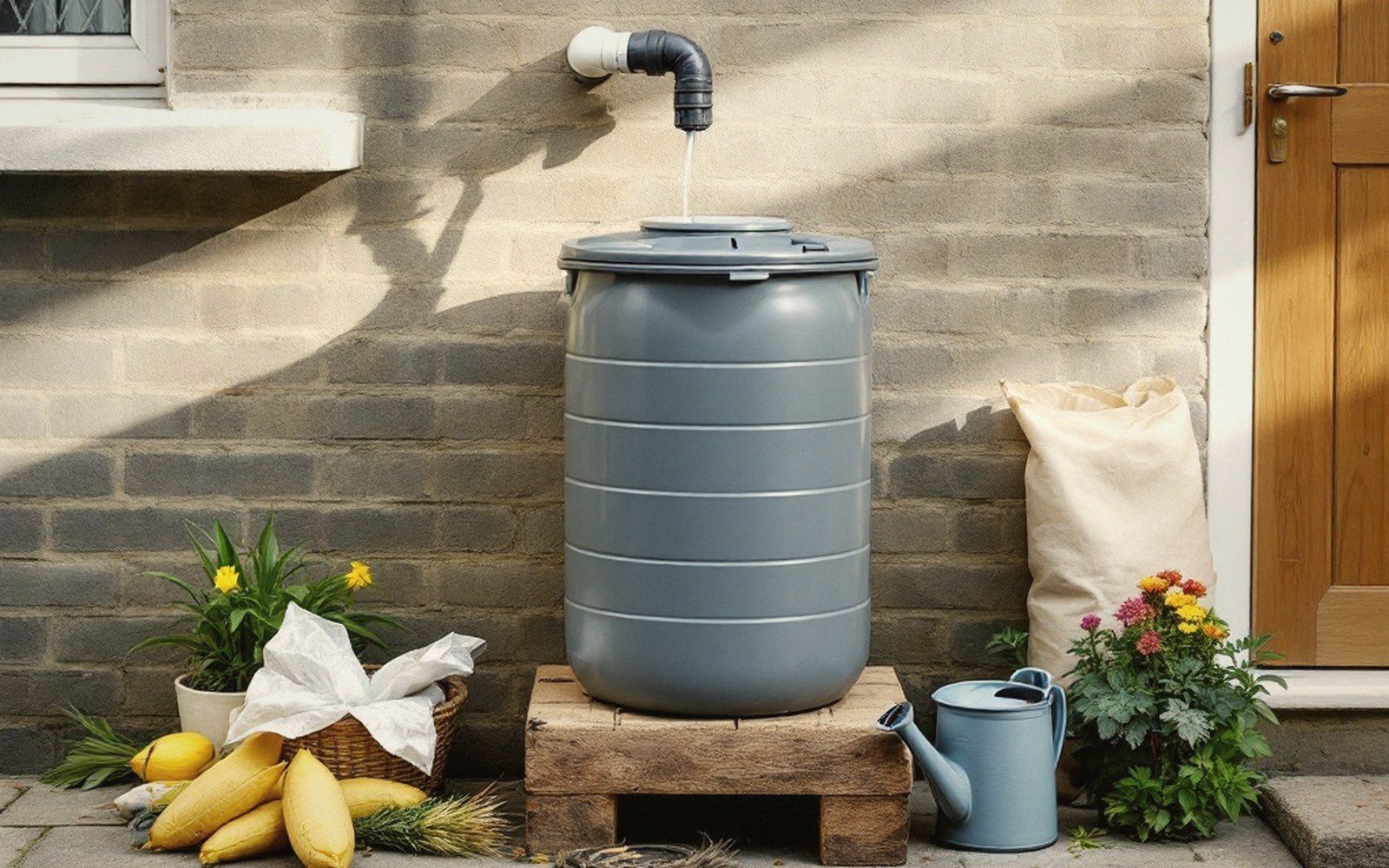
The safest approach is what is sometimes called bucket-and-chuck-it: you bail bath water manually and carry it outside while it is still warm. Warm greywater applied directly to soil breaks down quickly; greywater that sits in a container for more than twenty-four hours starts to support bacterial growth, and at that point it has become a health risk rather than a resource. Never store it. Never leave it overnight.
Where you put it is as important as when. Greywater can go around established trees, shrubs and ornamental plants. It should not go on vegetables you will eat raw — lettuces, salad leaves, anything where the edible part might come into contact with the water or the soil splash from it. Fruiting vegetables that you cook are a greyer area; the cautious position is to keep greywater off food crops altogether. Definitely keep it away from seedlings, which are far more sensitive to the salts and residues in soap.
Done carelessly, it creates problems that take a season to show and longer to fix.
Residues are the other constraint. A little washing-up liquid or shampoo, diluted across an established border, is unlikely to cause lasting harm. Bleach, antibacterial products and anything containing boron — some washing powders include it — can damage soil structure and harm plants directly. If you have used anything strong in the bath, that water goes down the drain.
The law in England is permissive for small-scale domestic use — you do not need a permit to carry a bucket to your roses — but that permissiveness assumes the water is applied to your own land, is not stored, and does not run off into a watercourse.

Done correctly, greywater reuse is genuinely useful. Done carelessly, it creates problems that take a season to show and longer to fix.

Where we stop
No mains electricity, gas, water mains, boilers, flues, roofs, ladders past single storey, structural work or anything requiring a qualified person. If a job could hurt somebody, it is not in this register.