Keeping it clean
A water butt that fills itself can also fill itself with debris, bird droppings and mosquito larvae — unless you give the water somewhere to stop and something to stop it with.

Maintenance cycle
- Mesh filter — rinse out after every significant rainfall
- Lid gaps — check fit at start of season; patch with dark material if loose
- Overflow pipe — fit a mesh cap to prevent midge access
- Annual clean — brush and plain water (no detergent), best done in autumn
The lid, the filter and why you need both
The lid and the filter solve different problems, and neither does the other's job. The lid keeps light out; light is what algae need to turn the water green and smelly. The filter — a simple mesh or gauze at the point where water enters from the downpipe — keeps out the physical debris: leaves, twigs, roof grit, the odd dead pigeon. Miss one or the other and you have either a cistern full of green soup or a barrel slowly clogging with mulch.
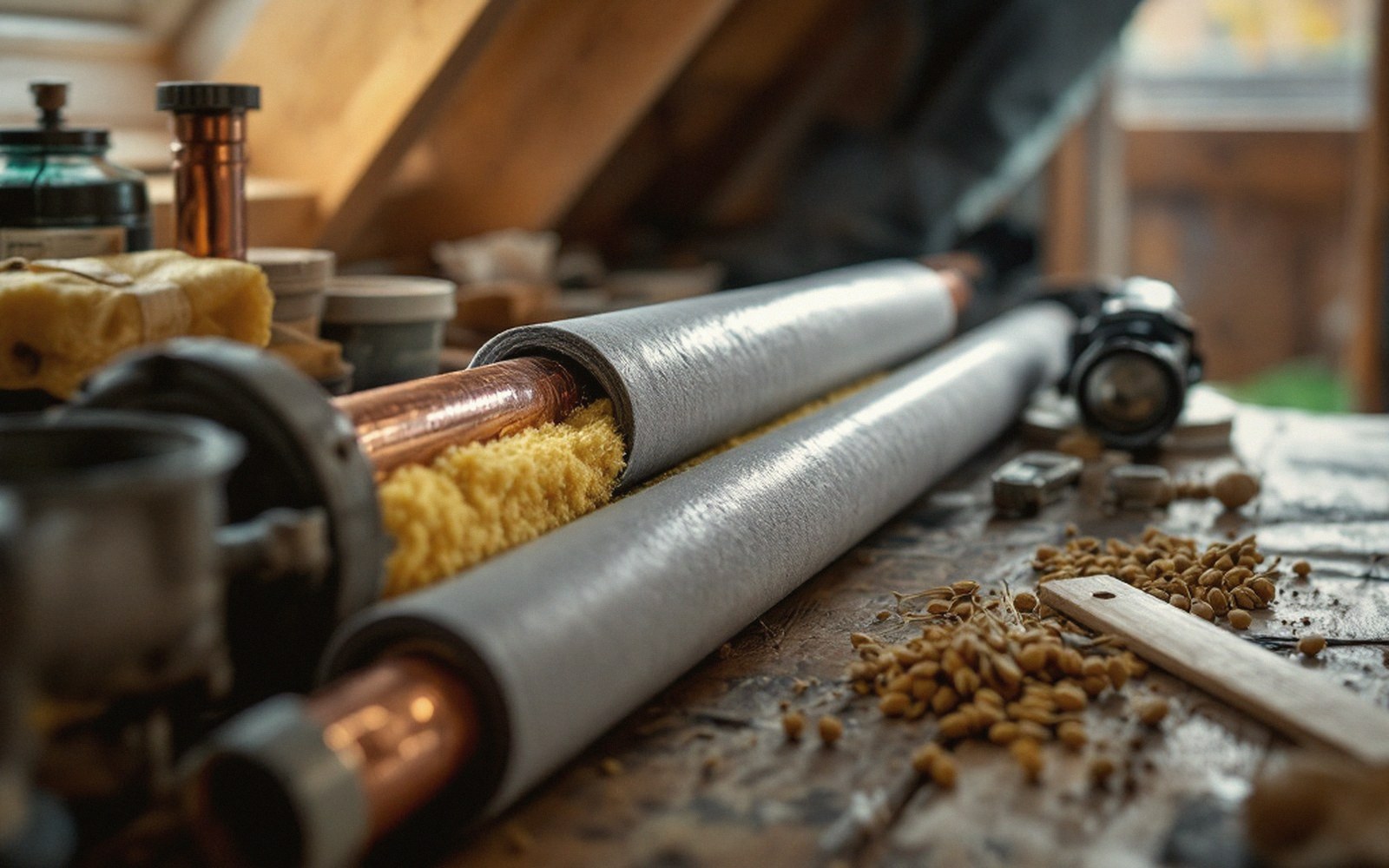
Most butts come with a basic lid, but the fit is often poor enough to let in light around the edges and give midges an easy way in. A piece of dark pond liner or even a folded bin bag laid over the top before the lid goes on is a quick fix if the lid is loose. The point is to keep the interior dark; standing water in sunlight will go green within a couple of weeks in summer no matter how clean it started.
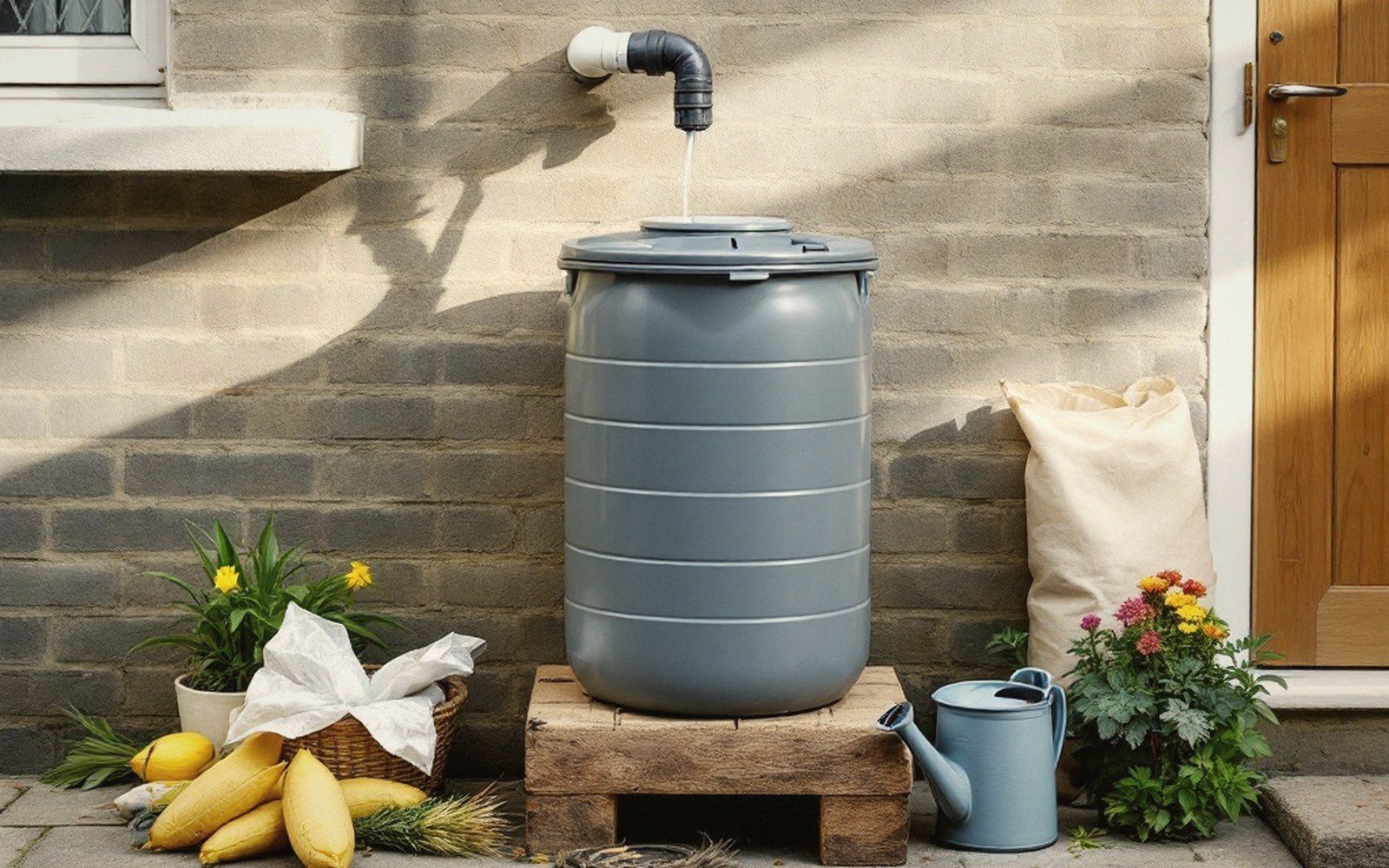
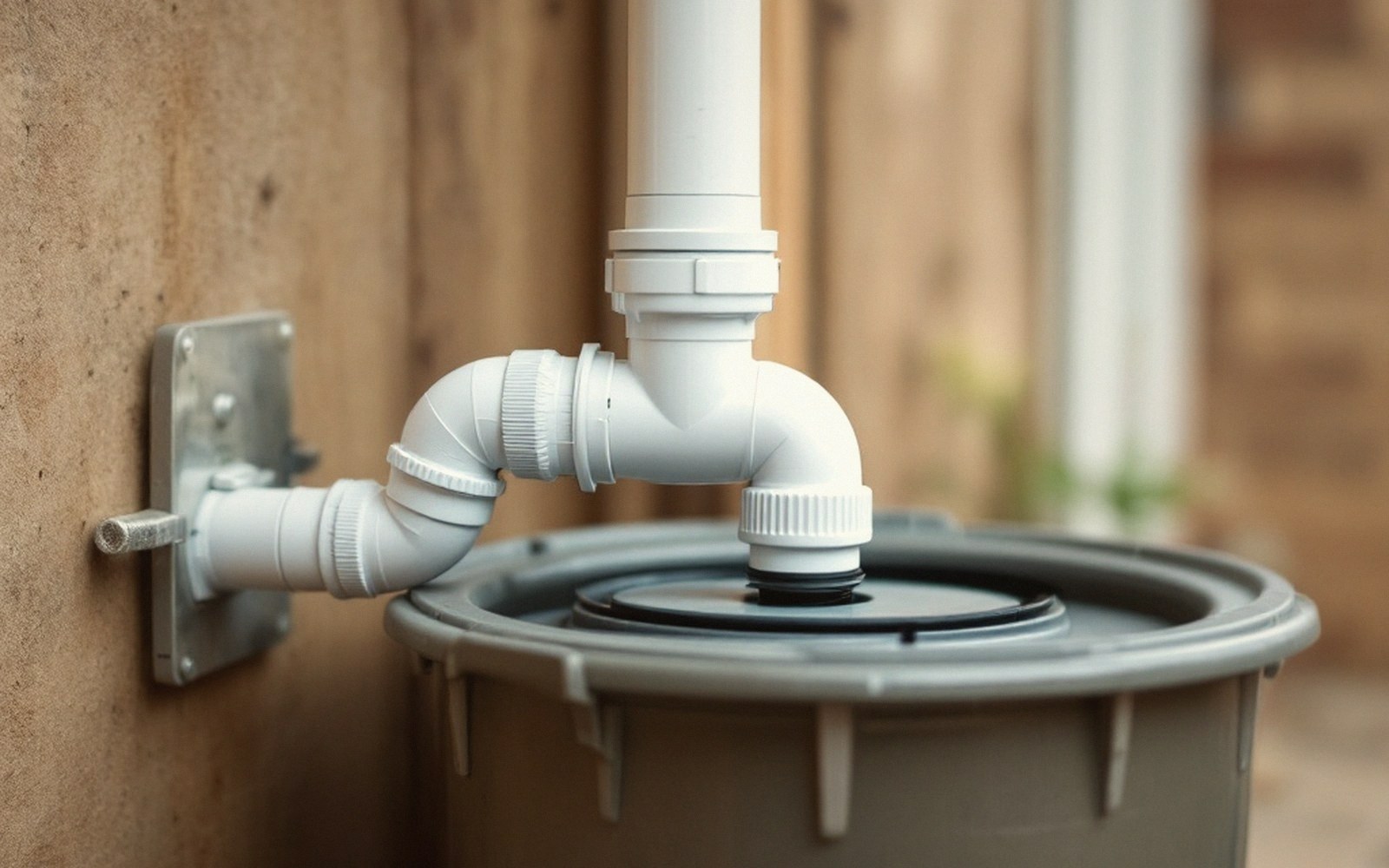
The mesh filter sits above the inlet, usually in a purpose-made filter basket or simply stretched across the top of the diverter cut into the downpipe where the water enters. Old tights or stockings stretched over a plastic frame work perfectly and cost nothing. The mesh needs rinsing out after every significant rainfall — if you leave it to block solid, water backs up in the downpipe rather than diverting, which is the opposite of what you want.
Mosquitoes lay eggs in still water and can complete a breeding cycle in as little as a week in warm weather. A well-fitting lid with no gaps is enough to stop them; they need to land on the surface to lay. If your lid has a hole for the inlet pipe, cover it with the same mesh you use to filter incoming water. The larvae need air just as the adults do, so a genuine seal is an effective deterrent.
Rinse the inside of the barrel once a year, ideally in autumn before you disconnect it for winter.
Check the overflow too. An open overflow pipe pointing into a gap in a wall or pooling against a foundation is its own small problem, and a mesh cap there prevents the same midge access from a different angle.
Rinse the inside of the barrel once a year, ideally in autumn before you disconnect it for winter. Tip it on its side and scrub with a stiff brush and plain water — no detergent, which would harm plants. That, plus a working lid and a clean filter, is all a water butt needs.
Where we stop
No mains electricity, gas, water mains, boilers, flues, roofs, ladders past single storey, structural work or anything requiring a qualified person. If a job could hurt somebody, it is not in this register.